
Home » EVA Resin
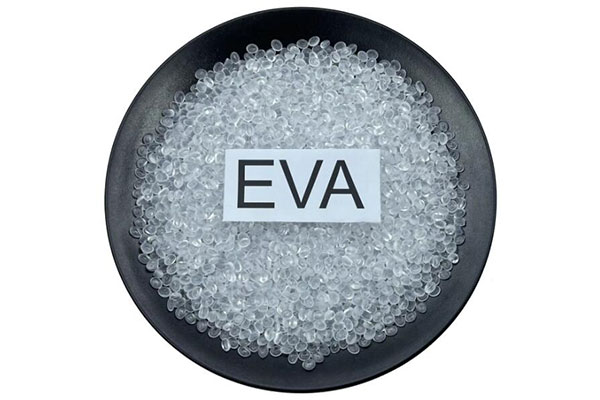
What Is Ethylene Vinyl Acetate EVA Resin
- HS Code: 39013000
Ethylene-vinyl Acetate Resin, referred to as EVA, is a thermoplastic resin made by copolymerization of ethylene and vinyl acetate. EVA resin is an ethylene-vinyl acetate copolymer, and the general vinyl acetate (VA) content is 5% to 40%. Compared with polyethylene, EVA Ethylene Vinyl Acetate has added vinyl acetate monomer into the molecular chain, which reduces the high crystallinity and improves flexibility, impact resistance, filler compatibility and heat sealing performance. It is widely used in foaming shoe materials, functional greenhouse films, packaging films, hot melt adhesives, wires and cables, as well as toys. In general, the performance of EVA resin mainly depends on the content of vinyl acetate in the molecular chain.
What Are Grades of EVA Resin We Supply
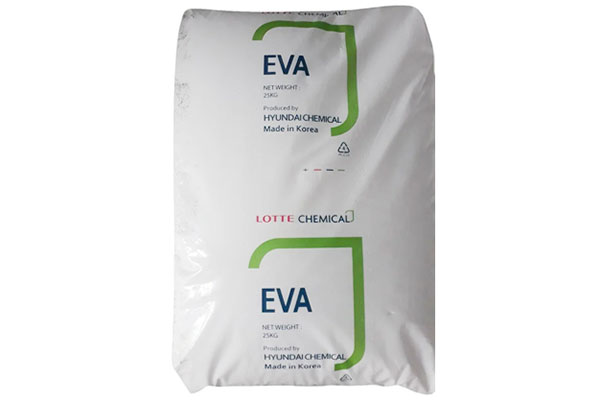
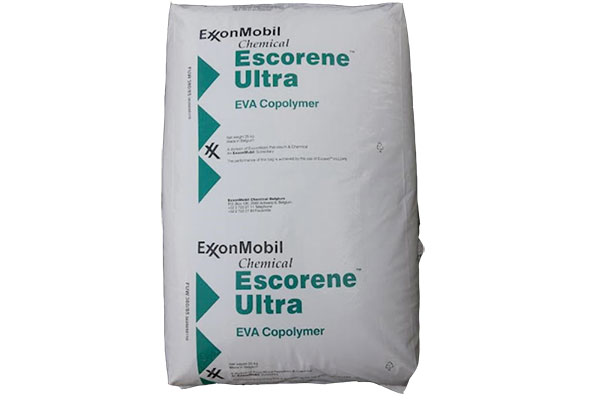
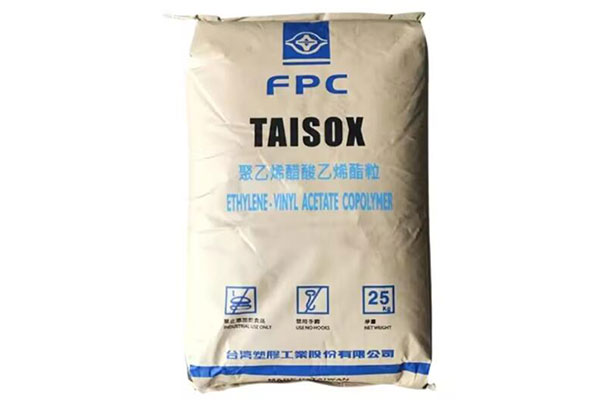
| Brands | Main Grades |
| LOTTE EVA | LVS430, VS430, VS410, VS420, VS440, VL730, VL830, VE800, VA600, VA800, VA810, VA900, VA910, VA920, VA930, VC590, VC640, VC710 |
| LG EVA | EA28150, EA28400, ES28005, EA28025, EA33045, VA900 |
| HANHUA EVA | 2518, 2014, E182L, 1157, 2050 |
| BASF EVA | 5110J, 5210J, 6110M, 00628, V6020M, V6110M |
| FORMOSA EVA | 7470K, 7470M, 7A60H |
| TPI EVA | WV1055, MV1055, SV1055, YV1055, SSV1055, SV1040 |
| Others | 00628, Y2022, Y2045, V5120J, V5110J, 180F, UL00628, UL00428, KA31, UE639 |
| Sipchem | 2518 CO, 3522 CO |
| Others | 00628, Y2022, Y2045, V5120J, V5110J, 180F, UL00628, UL00428, KA31, UE639 |
Would Like The Quotation
Leave more about your requirements, such as, brands, models, quantity, package, country, etc.
What Are Applications of EVA Resin
Foamed shoe materials. In the EVA resin used in shoe materials, the vinyl acetate content is generally 15% to 22%. Because EVA resin blended foam products have the properties of softness, good elasticity, and chemical corrosion resistance, they are widely used in the soles and interior materials of mid-to-high-end tourist shoes, mountaineering shoes, slippers, and sandals. In addition, this material is also used in the fields of sound insulation boards, gymnastics mats, and sealing materials.
Film. The main use of EVA film is to produce functional shed film. Functional shed film has high weather resistance, anti-fog and thermal insulation properties. The shed film made by adding a certain amount of EVA resin not only has a high light transmittance, but also has a greatly improved anti-fog performance, which can generally exceed 4 months. In addition, EVA can also be used to produce packaging films, medical films, laminated films, casting films, etc.
Wires and cables. With the continuous development of computer and network engineering, people are increasingly using halogen-free flame-retardant cables and silane cross-linked cables for the safety of computer rooms. Since EVA resin has good filler tolerance and cross-linking properties, it is widely used in halogen-free flame-retardant cables, semiconductor shielded cables and two-step silane cross-linked cables. In addition, EVA resin is also used to make the sheath of some special cables. The vinyl acetate content of EVA resin used in wires and cables is generally 12% to 24%.
Toys. EVA resin is also widely used in toys, such as child wheels, seat cushions, etc.
Hot melt adhesive. Hot melt adhesive with EVA resin as the main component does not contain solvents, does not pollute the environment and has high safety. It is very suitable for automated assembly line production. Therefore, it is widely used in book wireless binding, furniture edge banding, automobile and household appliance assembly, shoemaking, carpet coating and metal anti-corrosion coating.
What Are Classification and Different Uses of Ethylene Vinyl Acetate Copolymer EVA
The vinyl acetate content of industrial EVA copolymer is 5% to 95%, and the performance of each variety varies greatly. Generally, as the vinyl acetate content increases, the crystallinity, hardness, rigidity and heat deformation temperature gradually decrease. Meanwhile, the gloss, transparency, impact resistance, flexibility, stress cracking resistance, solubility in solvents, heat shrinkage and heat welding properties are improved to varying degrees.
EVA resin with a vinyl acetate content of 5% to 15%. Compared with low density polyethylene, its appearance and physical and mechanical properties are very similar, but its transparency, flexibility, heat welding and stress cracking resistance have been significantly improved. The processing method is also the same, suitable for agricultural film, heat shrink film, various composite films and general packaging films, and can also be used as cable sheaths.
EVA resin with a vinyl acetate content of 15% to 40%. It is flexible and elastic, and can be used as soles, sealing strips, cable products and foam plastic products. It is mixed with paraffin and used as a papermaking chemical. It also has good bonding properties with many materials and is widely used to prepare various hot melt adhesives and other types of adhesives for book binding and packaging sealing.
EVA elastomer with a vinyl acetate content of 40% to 50%. It can be used in the cable industry after cross-linking. Some factories in Western Europe graft vinyl chloride with it to improve the impact resistance of rigid polyvinyl chloride.
EVA emulsion with a vinyl acetate content of 70% to 95%. It is generally sold directly in the form of emulsion. It is used to prepare various coatings, adhesives and as paper and fabric coatings.
What Are Performance of Ethylene Vinyl Acetate Copolymer
Water resistance. Closed cell structure, no water absorption, moisture-proof, good water resistance.
Corrosion resistance. Resistant to seawater, grease, acid, alkali and other chemicals, antibacterial, non-toxic, odorless, non-polluting.
Processability. No joints, and easy to process by hot pressing, cutting, gluing, laminating, etc.
Vibration resistance. High resilience and tensile strength, high toughness, good shockproof and cushioning performance.
Thermal insulation. Excellent heat insulation, cold insulation and low temperature performance, can withstand severe cold and exposure. EVA has good low temperature resistance, and its thermal decomposition temperature is low, about 230℃. With the increase of molecular weight, the softening point of EVA rises, the processability and surface gloss of plastic parts decrease, but the strength increases, and the impact toughness and environmental stress cracking resistance are improved.
Sound insulation. Closed cells, good sound insulation effect.
EVA’s chemical resistance and oil resistance are slightly worse than PE and PVC, and the change is more obvious with the increase of vinyl acetate content.
Compared with PE, EVA has improved performance mainly in terms of elasticity, flexibility, glossiness, air permeability, etc. In addition, its resistance to environmental stress cracking has been improved, and its tolerance to fillers has increased. The method of adding more reinforcing fillers can be used to avoid or reduce the decline in EVA’s mechanical properties compared with PE.
EVA can also be modified to obtain new applications. Its modification can be considered from two aspects. One is to use EVA as the backbone for grafting other monomers, the other is to partially alcoholize EVA.
Would Like The Quotation
Leave more about your requirements, such as, brands, models, quantity, package, country, etc.
FAQs of Ethylene Vinyl Acetate
1. What is ethylene vinyl acetate EVA?
Ethylene vinyl acetate is a thermoplastic polymer copolymerized from ethylene monomers and vinyl acetate (VA) monomers. It combines the flexibility of vinyl acetate with the durability of ethylene, resulting in a soft, tough, and versatile material. Unlike pure polyethylene, the properties of EVA can be controlled by adjusting the vinyl acetate (VA) content, making it suitable for various applications.
2. What is the difference between ethylene vinyl acetate EVA and polyethylene (PE)?
EVA contains vinyl acetate (VA) monomers. Polyethylene is a homopolymer of ethylene, possessing rigidity and chemical resistance. The VA units in EVA disrupt the crystalline structure of ethylene, improving the material’s flexibility, transparency, and impact resistance. Furthermore, EVA is more viscous than PE and has better compatibility with additives, while PE has advantages in high-temperature stability and low-cost rigidity.
3. What factors affect the properties of ethylene vinyl acetate copolymer?
The main influencing factors are the vinyl acetate (VA) content and the melt flow rate (MFR). When the VA content is high (10%-40%), the material’s flexibility, elasticity, and transparency improve, but rigidity and heat resistance decrease. When the VA content is low (below 10%), the material is harder, with properties close to polyethylene.
Melt flow rate (MFR) affects processing performance. EVA with a high MFR is easier to mold and extrude, while low MFR grades have superior mechanical strength.
4. Can ethylene vinyl acetate resin be used in food contact applications?
Food-grade EVA resin are non-toxic and odorless, and can come into direct contact with food without migrating harmful substances into it. They are suitable for food packaging, food containers, and kitchen utensils. However, non-food-grade EVA may contain plasticizers or other non-food-grade additives, so it is essential to verify product certification.
5. Are ethylene vinyl acetate EVA copolymers biodegradable?
Standard ethylene vinyl acetate, as synthetic thermoplastics, cannot be completely biodegradable in natural environments. However, biodegradable EVA variants exist on the market. By adding additives such as starch and polylactic acid, they can decompose more quickly in industrial composting environments. These biodegradable grades are often used in single-use products to reduce environmental impact.
6. What is the typical VA content range for ethylene vinyl acetate polymer resin?
The VA content range for EVA is typically 2% to 40%.
Low VA content grades (2%-10%) are more rigid and suitable for films, pipes, and injection-molded products.
Medium VA content grades (10%-20%) balance flexibility and strength and are suitable for footwear materials and wire and cable.
High VA content grades (20%-40%) have excellent flexibility and are used in adhesives, sealants, and medical devices.
7. What is the melt flow rate (MFR) of EVA copolymers?
The melt flow rate of EVA is typically between 0.5 and 500, reflecting the material’s fluidity during processing.
High MFR EVA has better fluidity and is suitable for films, coatings, and complex molded parts.
Low MFR EVA has higher viscosity, better tensile strength, and better durability and is suitable for foam materials and structural components.
8. What are the temperature resistance properties of EVA resin?
EVA resins have lower heat resistance than polyethylene, with a continuous operating temperature range of -50℃ to 80℃, depending on the VA content.
High VA content grades have lower heat resistance (maximum 60-70℃).
Low VA content grades can withstand temperatures up to 80℃.
EVA softens at 70-90℃ and melts at 105-120℃, making it suitable for low-temperature processing.
9. Does EVA ethylene vinyl acetate have good chemical resistance?
EVA is resistant to water, alcohol, and weak acids and alkalis, but is susceptible to organic solvents (such as gasoline and acetone), greases, and strong oxidants.
Chemical resistance decreases with increasing VA content. Low VA content EVA (≤10%) has better solvent resistance, while high VA content grades are more prone to swelling or degradation when exposed to corrosive chemicals.
10. Does EVA have UV resistance?
Standard EVA have no UV resistance. Long-term exposure to sunlight will cause degradation, leading to brittleness, discoloration, and loss of mechanical properties.
To improve UV resistance, manufacturers typically add UV absorbers, hindered amine light stabilizers (HALS), or carbon black. UV-modified EVA can be used in outdoor applications such as solar panels and roofing membranes.
11. Can EVA be blended with other polymers?
Yes. EVA is often blended with other polymers to adjust properties. Blending EVA with PE can improve rigidity. Blending EVA with PVC can enhance flexibility and flame retardancy. Blending EVA with rubber can improve elasticity. Blending EVA with PP can balance impact resistance and heat stability.
12. What role do EVA plastic play in the footwear industry?
EVA foam is a core raw material in footwear, used to make soles, insoles, and midsoles. It is lightweight, has good shock absorption, and provides cushioning, offering comfortable support. EVA foam can be molded into various shapes and densities, suitable for athletic shoes, sandals, boots, and casual shoes. Non-foamed EVA is used for uppers and linings.
13. How are EVA ethylene vinyl acetate used in the packaging industry?
EVA possesses excellent heat-sealing properties, transparency, and impact resistance, making it an ideal material for packaging. It can be used to produce heat-sealing films for food packaging, shrink films for product wrapping, and composite films with paper and plastic substrates. EVA-based adhesives, due to their high bonding strength, are also used in the production of packaging tapes and labels.
14. Can EVA be used in solar panels?
Yes. EVA copolymers are a key component of solar panels. As an encapsulation material, they fill the space between the glass cover and the photovoltaic (PV) cells, protecting the cells from moisture, dust, and mechanical damage while ensuring optical transparency for light transmission. UV-modified EVA encapsulation materials exhibit strong adhesion to glass and PV cells, extending the lifespan of the solar panel.
- Email: sales@chemategroup.com
- Tel: 0086-371-60921621
- Whatsapp: +86 18624832876
- Wechat: +86 18624832876
- ADD: NO.80 PUHUI ROAD,ZHENGZHOU CITY, HENAN PROVINCE, CHINA