
Home » PP Injection Molding
What Is PP Injection Molding?
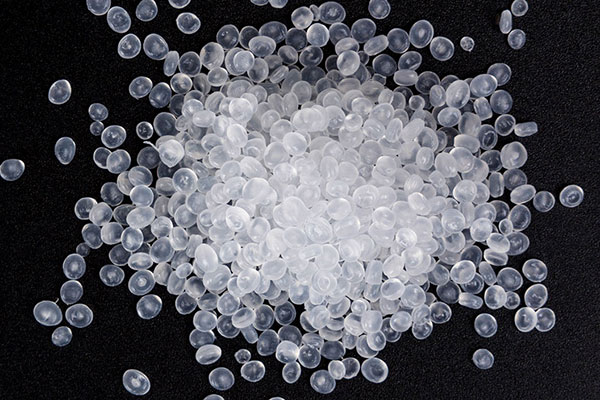
PP Injection molding is a specialized grade of polypropylene resin that has been specially modified and treated for injection molding. Compared to general-purpose polypropylene, injection molding grade PP offers higher flowability, a better balance of stiffness and toughness, and superior processing properties.
Hot Sale Injection Moulding PP Granules in Our Company
| Type | Grade | MI | Factory | Origin | MTS PER 40′ FCL(MT) |
| PP Injection | HJ333MO | 75 | BOROUGE | UAE | 24.75 |
| PP Copo Injection | 36MK10 | 5.5 | SABIC | KSA | 24.75 |
| 37MK10 | 9 | SABIC | KSA | 24.75 | |
| 310MK10 | 25 | SABIC | KSA | 24.75 | |
| PP Injection | HP500N | 12 | JINNENG | CHINA | 28 |
| 1100N | 11 | NING MEI, BOHUA | CHINA | 28 | |
| M12 | 12 | ORIENT ENERGY, GRAND RESOURCE | CHINA | 28 | |
| M17 | 17 | GRAND RESOURCE | CHINA | 28 | |
| HP500P | 17 | PETROCHEMICAL | CHINA | 28 |
Would Like The Quotation
Leave more about your requirements, such as, brands, models, quantity, package, country, etc.
What Are the Performance Characteristics of Injection Molding Polypropylene?
Excellent flow properties. In its molten state, it easily fills every corner of the mold, ensuring a complete molded part with crisp details.
High crystallinity. This results in improved stiffness and surface hardness in molded parts. Its shrinkage is also relatively stable and predictable, which is crucial for precision injection molding.
Excellent stiffness-toughness balance. By adding an appropriate amount of elastomer (polyolefin elastomer), impact strength can be significantly improved while maintaining stiffness, especially at low temperatures. This adjustable mechanical property enables injection-molding-grade polypropylene to meet the needs of a wide range of applications, from rigid containers to flexible hinges.
Excellent chemical resistance. Its resistance to most acids, bases, and salt solutions makes it ideal for chemical containers, laboratory equipment, and medical supplies.
Excellent electrical insulation properties. It is an ideal choice for electronic and electrical components.
Excellent processing properties. Injection-molding-grade polypropylene has a wide processing temperature range (typically between 200-280°C), making the injection molding process easier to control. Its excellent thermal stability allows for long dwell times without significant degradation.
Furthermore, injection moulding polypropylene has extremely low water absorption (<0.01%) and generally does not require drying prior to processing, simplifying the production process and reducing energy consumption.
What are the Applications of Polypropylene Injection Molding?
Automotive Industry
In the automotive industry, polypropylene injection molding grade is the most widely used plastic material.
From interior components such as instrument panels, door panels, and pillar guards to exterior parts such as bumpers, wheel arches, and side skirts, to functional components such as cooling fans and battery housings, polypropylene material is ubiquitous.
In recent years, the trend toward lightweighting in automobiles has driven demand for long glass fiber-reinforced polypropylene (LFT-PP). This material offers higher strength and rigidity than short glass fiber-reinforced PP and is used in semi-structural components such as front-end modules and door modules.
Home Appliance Industry
Home appliance products require excellent material rigidity, heat resistance, chemical resistance, and a high-quality appearance. Various modified PP injection molding can effectively meet these requirements.
For example, applications such as washing machine drums, bases, and covers, refrigerator drawers and door linings, and air conditioner panels and fan blades.
Packaging Containers
Food containers, storage boxes, and organizers require materials with sufficient rigidity, impact resistance, and hygienic safety. Through nucleating agent modification and process optimization, transparent polypropylene achieves transparency similar to that of PS and PET. But with improved heat resistance, making it suitable for microwaveable containers.
Consumer Goods and Household Goods
Injection molding grade polypropylene PP successfully combines high performance and safety with low cost, perfectly meeting the core consumer market demand for durable, affordable, and user-friendly products. From small hangers to sturdy organizers, PP, with its simple and reliable quality, has laid the foundation for modern convenience.
Medical Devices
PP plastic injection molding is widely used in medical supplies such as syringes, infusion containers, and laboratory equipment due to its excellent chemical stability, sterilizability, and low toxicity. However, medical-grade polypropylene requires relevant certification.
Production Process for Injection Moulding PP Granules
Catalyst Use
The base resin for injection moulding PP granules is primarily produced through polymerization using either Ziegler-Natta or metallocene catalysts. Ziegler-Natta catalyst technology is mature and can produce resins with a broad molecular weight distribution and good processing properties. Metallocene catalysts, on the other hand, produce resins with a narrower molecular weight distribution, exhibiting improved mechanical properties and clarity.
Polymerization Process
Modern polymerization processes typically utilize either gas-phase or bulk processes. The gas-phase process offers flexibility and can produce a full range of polypropylene grades. The bulk process offers the advantages of low investment and energy consumption. In recent years, many manufacturers have developed multi-zone circulating reactor technology, which enables the production of polypropylene with bimodal or multimodal molecular weight distributions in a single reactor, achieving a perfect balance between processing and final product properties.
What Are the Commonly Used Modification Methods?
Simple polypropylene homopolymers or copolymers often fail to meet all the requirements for injection molding applications, necessitating a variety of modification techniques to tailor their properties.
>> Copolymerization Modification
The introduction of comonomers such as ethylene can disrupt the regularity of polypropylene, reduce crystallinity, and improve impact properties. Random copolymers offer improved transparency, while impact copolymers exhibit superior toughness.
>> Filling and Reinforcement
Adding fillers such as talc, calcium carbonate, and glass fiber can significantly improve rigidity, heat resistance, and dimensional stability. Polymer composites filled with 25%-40% talc can achieve heat distortion temperatures exceeding 120℃.
>> Toughening and Modification
Adding elastomers such as POE and EPDM can significantly improve impact strength, especially low-temperature impact strength. This technology is crucial for outdoor components such as automotive bumpers.
>> Nucleating Agent Modification
Adding organic or inorganic nucleating agents can increase crystallization nucleation sites and reduce spherulite size, thereby improving transparency, rigidity, and heat distortion temperature.
How to Pelletize?
The modified polypropylene is then extruded to form uniform pellets. A co-rotating twin-screw extruder is the core equipment in this process, providing thorough melting, mixing, and devolatilization. Modern pelletizing lines also integrate a series of online monitoring systems to monitor melt pressure, temperature, and various process parameters in real time to ensure consistent product quality.
FAQs about Injection Molding PP
1. How does injection molding grade polypropylene differ from other PP grades?
Injection molding grade polypropylene is designed to flow smoothly into molds, solidify quickly, and produce high-quality, consistent parts. Unlike other PP grades, it has a tailored melt flow index (MFI) that balances fluidity and mechanical strength, allowing it to fill complex mold cavities efficiently without defects. It also features optimized crystallinity and thermal stability, making it suitable for mass production of parts ranging from small consumer goods to large automotive components.
2. What are the key properties of injection molding grade polypropylene?
Excellent chemical resistance to acids, bases, and organic solvents, ensuring durability in harsh environments.
Low density (0.90-0.91 g/cm³), making parts lightweight yet sturdy.
High heat resistance, with the ability to withstand long-term use at 100°C and short-term exposure to 150°C without deformation.
Good impact resistance and low hygroscopicity, meaning it requires minimal pre-drying before molding.
Additionally, it has good flowability, a moderate shrinkage rate (1.2-2.5%), and excellent dimensional stability, reducing the risk of defects like warping or shrinkage holes.
3. What is the typical melt flow index (MFI) range for injection moulding PP?
The typical melt flow index (MFI) range for injection grade polypropylene is 1-60 g/10 min (measured at 230°C/2.16 kg), with specific values depending on the application.
Lower MFI (1-12 g/10 min) is used for rigid parts requiring high strength, such as automotive brackets or industrial components, as it offers better mechanical properties but lower flowability.
Higher MFI (20-60 g/10 min) is ideal for thin-walled parts, such as food containers or packaging, because it flows more easily into complex, narrow mold cavities. For some ultra-thin-wall or high-speed injection molding applications, the melt flow index can reach 60 ~ 100 g/10 min.
4. Is injection molding grade PP food-safe?
Yes, many injection grade polypropylene formulations are food-safe, as PP is non-toxic, odorless, and resistant to food acids, oils, and moisture. To ensure food safety, the injection molding grade polypropylene resin must meet specific industry standards and certifications. In the United States, it must comply with FDA regulations. In the European Union, it must meet EU Regulation. Additionally, some formulations may have certifications like NSF or BPA-free, though PP does not contain BPA naturally.
5. Can polypropylene injection molding be recycled?
Yes, injection grade polypropylene is recyclable (recycling code 5, marked with “PP”) and is one of the most widely recycled thermoplastics due to its durability and chemical stability. Recycled PP (rPP) can be reused in injection molding for non-critical parts, such as automotive interiors, packaging, and consumer goods.
6. How does PP injection molding grade PP compare to other injection molding plastics?
Compared to polyethylene (PE), PP has higher stiffness, better heat resistance, and lower shrinkage, making it better for rigid, heat-resistant parts.
Unlike ABS, PP is more chemical-resistant, lighter, and less expensive. But ABS offers better impact resistance and surface finish for aesthetic parts.
Compared to polycarbonate (PC), PP is more cost-effective, easier to process, and resistant to chemicals. But PC has superior transparency and impact strength.
PP also has a lower density than most other plastics (0.90-0.91 g/cm³), reducing part weight and material costs.
7. What are the temperature limits for PP injection molding parts in end-use applications?
Injection molding PP parts have excellent heat resistance, with typical end-use temperature limits ranging from -20°C to 100°C for long-term use.
Homopolymer PP has the highest heat deflection temperature of around 100°C, making it suitable for applications like small household appliances that encounter moderate heat.
Copolymer PP has better low-temperature impact resistance, remaining ductile down to -20°C or lower, which is ideal for outdoor or cold-environment parts. With the addition of nucleating agents, PP’s heat resistance can be further improved, allowing short-term use at up to 150°C.
8. What is the difference between injection molding grade PPH and PPC?
Homopolymer PP is made from a single monomer, offering high stiffness, excellent chemical resistance, and a lower cost. It is ideal for rigid parts that do not require high impact resistance, such as caps, hinges, housings, and general consumer goods. However, it can be brittle at low temperatures (below 0°C).
Copolymer PP is made by combining propylene with a small amount of ethylene. Random copolymer PP has improved transparency and impact resistance, suitable for clear food containers and medical parts. Block copolymer PP has superior low-temperature impact resistance , making it ideal for automotive parts, appliances, and outdoor products.
Copolymer PP is slightly more expensive than homopolymer PP but offers better versatility for demanding applications.
- Email: sales@chemategroup.com
- Tel: 0086-371-60921621
- Whatsapp: +86 18624832876
- Wechat: +86 18624832876
- ADD: NO.80 PUHUI ROAD,ZHENGZHOU CITY, HENAN PROVINCE, CHINA