
Home » PP Homopolymer
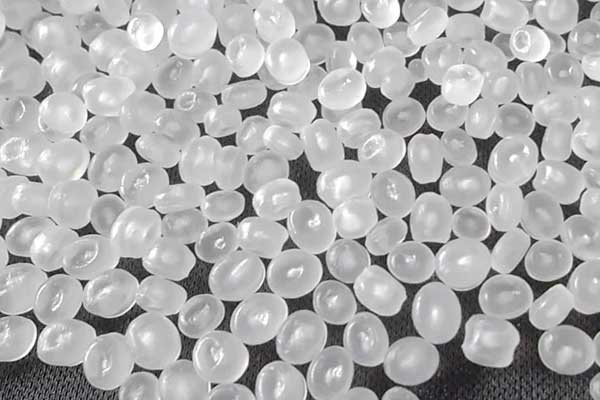
What Is PP Homopolymer
PP homopolymer PPH is a kind of high molecular polymer formed by the polymerization of a single propylene monomer. Due to the way of chain growth in the polymerization reaction determines the shape of molecular chain, the spatial arrangement of methyl groups and the stereoregularity. And then determine its crystal structure, crystallinity, density and related physical and mechanical properties. Homopolymer polypropylene is translucent with a solid in the middle. Its hardness is softer than that of PP copolymer. Homopolymer polypropylene was the first of stereoregular polymers and has been the fastest growing major thermoplastic. It has a wide range of applications in the field of thermoplastics, especially in fiber and filament, film extrusion, injection molding, etc.
Different Grades of Homopolymer Polypropylene We can Supply
| Models | Brands | Melt Flow Index | Applications | Properties |
| H540 | LG | 8 | Auto parts, electrical appliances | High rigidity, heat resistant |
| H1500 | LG | 12 | Electronic appliances, toys | High rigidity, high fluidity |
| H930F | SK | 3.5 | Beverage straws, sheets, extrusion molding applications | High rigidity, high fluidity, good mechanical properties |
| HP500N | Arak | 12 | Small daily necessities injection molded parts | Food grade, High rigidity, high fluidity |
| HP502N | Arak | 12 | Cooling boxes, thermos flasks, flower pots, small appliances, syringes | High rigidity, high toughness |
| 2100N | ORPIC | 11 | Electronic appliances, automobiles | High rigidity |
| 1100N | ORPIC | 12 | Articles for daily use | Food grade, high rigidity, high fluidity |
| 1304E5 | Exxon | 11 | Packaging tools, containers | |
| 1364E2 | Exxon | 12 | Shells, cups, shield | |
| 6431 | Basell | 7.5 | Sealed appliances, toys | High rigidity, high definition |
| HP400M | Basell | 7.5 | Food, medical containers | Food and medical grade |
| HP400H | Basell | 2 | Bottle caps, containers, household items | Rigid, balanced and good processability |
| HP401H | Basell | 2.2 | Rigid packaging, food containers | High impact, high rigidity, good processability |
| HP502N | Basell | 11 | Furniture, shells, shield | High rigidity, high toughness |
| 6331 | Basell | 12 | Sporting goods, toys | Easy formation |
| HP500N | Basell | 12 | Containers, packaging boxes, furniture | Food grade, good rigidity, good fluidity |
| HP602N | Basell | 12 | Toys, containers, sporting goods | Good rigidity, high gloss |
| HP401R | Basell | 25 | Furniture, daily supplies | Food grade, high fluidity |
| HD120MO | Borouge | 8 | Household supplies, packaging, shells, shield | Food grade, high rigidity |
| BF970MO | Borouge | 20 | Pallets, buckets | High rigidity, high fluidity, high impact resistance |
| HG385MO | Borouge | 25 | Screw caps, bottle caps, hinge caps, thick parts | High rigidity, high fluidity, antistatic |
| HC205TF | Borouge | 4 | Containers, lids, package, dairy containers | High rigidity, good processability, short molding cycle |
| HJ4006 | KPIC | 6 | Microwave tray, food storage bin | Food grade, high rigidity, heat resistant, scratch resistant |
| HJ4012 | KPIC | 12 | Microwave tray, food storage bin | Food grade, high rigidity, heat resistant |
| 4017 | KPIC | 8.5 | Home appliance, industrial components, agricultural applications | |
| 4017M | KPIC | 14 | Electrical parts, industrial parts | |
| HJ4045 | KPIC | 45 | Household goods, electronics and appliance | High rigidity, high fluidity, heat resistant, scratch resistant |
| 6431 | TITAN | 7.5 | Airtight container, toys | High rigidity, high definition |
| 6331 | TITAN | 14 | Housewares | Easy formation |
| 570P | Sabic | 8 | Hard packaging, daily necessities, sealed injection mold | High rigidity, high gloss |
| 5702P | Sabic | 9 | Containers, furniture, toys | |
| 575P | Sabic | 11 | Hard packaging, sealed injection mold | Good injection molding performance |
| J700N | HYOSUNG | 11 | Daily supplies, packaging bag |
| Item | Type | Brand |
| PP Homopolyer | V30G | KunLun, BaoFeng |
| 1100N | ShenHua | |
| HP500P | KunLun | |
| Y16SY | SanYuan | |
| S2015 | Oriental Energy | |
| 1450T | YungSox | |
| 1120 | YungSox | |
| MX90X | HengLi | |
| HP500N | Sinopec,PCEC |
Would Like The Quotation
Leave more about your requirements, such as, brands, models, quantity, package, country, etc.
FAQs of PPH Granule
1. What are characteristics of homopolymer polypropylene?
It is polymerized from a single propylene monomer, and the molecular chain doesn’t contain ethylene monomer, so the regularity of the molecular chain is high and strength is good. However, compared with PP copolymer, PP homopolymer has high crystallinity, poor impact performance, poor toughness, poor dimensional stability, easy aging and poor long-term heat resistance stability.
2. What are main applications of PPH granule?
PP homopolymers can be processed using a variety of processes to produce a wide range of products. It can be extruded polypropulene granular of blowing grade, flat yarn grade, injection mulding grade, fiber grade and blown film grade.
Used for the production of packaging tapes, blowing bottles, brushes, ropes, woven bags, toys, folders, electrical appliances, household items, microwave lunch boxes, storage boxes, wrapping paper films.
Extruded products are the largest market of PP homopolymer, and textile fibers and monofilaments are the largest segment. Homopolymer Polypropylene has been the main material for making fibers. This is due to its tinting ability, abrasion and chemicals resistance properties and favorable economic conditions.
Injection moulding products are the second largest market of PP homopolymers, including containers, closures, automotive industry, household goods, toys and many other consumer products.
Homopolymer Polypropylene is also often used to produce blow-molded containers because of its good moisture barrier properties and sufficient clarity.
3. What is molecular weight of polypropylene homopolymer?
- Molecular weight, usually expressed in flow rate.
- Molecular weight distribution. It is usually expressed as the ratio of the weight average molecular weight to the number average molecular weight of the polymer, which is also known as the polydispersity index.
- The molecular weight distribution of a polymer has a significant impact on its processability and end-use properties. This is because polypropylene in the molten state is shear sensitive. As the applied pressure increases, its apparent viscosity decreases. PP with a broad molecular weight distribution is more shear sensitive than PP homopolyer with a narrow molecular weight distribution. Therefore, materials with a broad molecular weight distribution are easier to process during injection molding.
- Certain applications, especially fibers, require narrow molecular weight distributions.
4. What are the core differences between PPH, PPR and PPB?
PPH is made from a single propylene monomer, offering high crystallinity, rigidity, and chemical resistance but relatively poor low-temperature impact resistance.
PPR is a random copolymer of propylene and a small amount of ethylene, featuring high transparency and creep resistance, ideal for hot water pipes.
PPB is a block copolymer of propylene and ethylene, with strong impact resistance but lower transparency, suitable for automotive parts and home appliances.
5. What is PPH’s high temperature resistance and applicable temperature range?
PPH exhibits excellent high-temperature resistance, with a melting point of 160-165℃, making it suitable for long-term use in temperatures ranging from -20℃ to 110℃.
In short-term applications, it can withstand temperatures up to 120℃ without significant performance degradation. This makes PPH ideal for applications involving hot water, high-temperature media transportation, and high-heat manufacturing processes, outperforming many other thermoplastic materials in high-temperature stability.
6. What is the specific performance of PPH’s chemical resistance?
PPH has outstanding chemical resistance, being highly resistant to most acids, alkalis, and organic solvents. It is not easily corroded, dissolved, or degraded when in contact with these substances, making it a preferred material for chemical industry applications. However, PP homopolymer has poor resistance to aromatic, aliphatic, and chlorinated solvents, so it should be avoided in environments where these substances are present.
7. Is PPH non-toxic and suitable for food and pharmaceutical fields?
Yes, PPH is non-toxic, odorless, and free of harmful substances, fully complying with international safety standards such as FDA and NSF.
Its non-toxic nature makes it suitable for food packaging, drinking water pipes, and pharmaceutical containers, as it does not leach harmful chemicals into the products it contacts.
Additionally, PPH can withstand 121℃ steam sterilization for 30 minutes, making it ideal for sterile environments in the pharmaceutical and food processing industries.
8. What is PPH’s electrical insulation performance and its electrical applications?
PPH has excellent electrical insulation properties, being non-conductive, non-thermal conductive, and having a low dielectric constant, which ensures stable insulation performance even in high-temperature or humid environments.
It also has good arc resistance and is not easily aged, making it widely used in the electronic and electrical industry for insulation parts, cable sheaths, electrical enclosures, and semiconductor manufacturing equipment, especially in scenarios requiring high purity and corrosion resistance.
9. Can PPH be recycled and will its performance decrease after recycling?
PPH is a recyclable thermoplastic polymer, and waste PPH plastic products can be recycled and reprocessed into new products through physical modification technology. After recycling, the performance of PPH will decrease slightly, but it can still retain more than 90% of its original performance. Recycled PPH resin is sufficient for products with lower performance requirements, such as plastic pallets, trash cans, and low-load plastic components.
Why Choose Us
- A trusted Polypropylene PP agent in China. Complete models, original authentic guaranteed.
- Adequate inventory. Professional warehouse management.
- Quality assurance. Strict EX-warehouse quality inspection. On the premise of ensuring quality, it will be delivered to you as soon as possible.
- Affordable price and timely delivery. Inquiry us now for PP Homopolymer price.
- Email: sales@chemategroup.com
- Tel: 0086-371-60921621
- Whatsapp: +86 18624832876
- Wechat: +86 18624832876
- ADD: NO.80 PUHUI ROAD,ZHENGZHOU CITY, HENAN PROVINCE, CHINA