
Home » PP HP550J
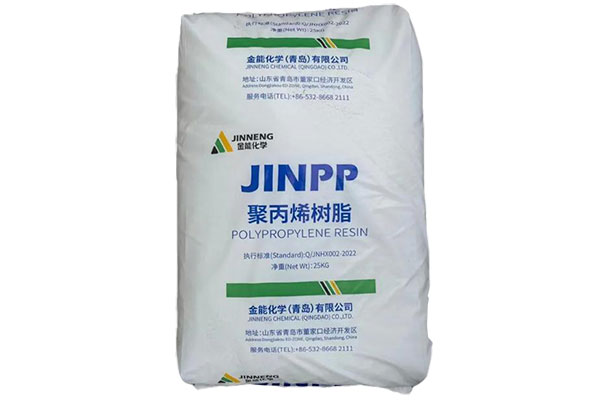
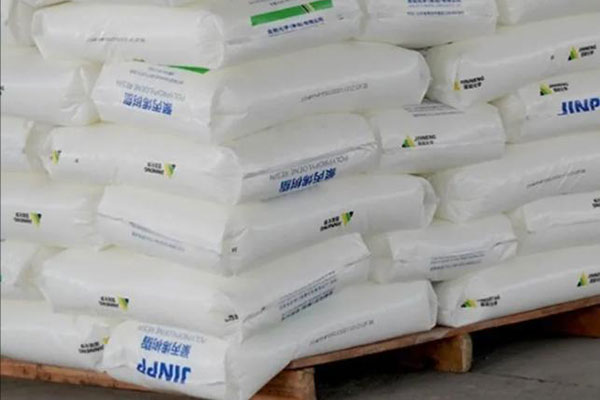
PP HP550J is a polypropylene homo-polymer particularly suitable for the extrusion of sheet for thermoforming, film yarn & monofilament.
Combining outstanding processability with good mechanical properties, HP550J PP is designed for the production of films that can be converted into stretched tapes for weaving applications.
PP HP550J TDS & Specifications

| Typical properties | Unit | Value | Test method(ASTM) |
| MFR @230°C, 2.16 kg | gr/10min | 3 | D1238/L |
| Felexural Modulus | Mpa | 1350 | D790 |
| Notched Izod Impact@23°C | J/m | 35 | D256 |
| Tensile Strength@Yield | Mpa | 35 | D638 |
| Elongation@Yield | % | 12 | D638 |
| Vicat Softening Point,10N | °C | 156 | D1525 |
| HDT(0.46N/mm2) | °C | 94 | D648 |
| Rockwell Hardness | R.Scale | 102 | D785 |
| Oven Aging@150°C | Hours | 360 | D3012 |
FAQs of HP550J Polypropylene
1. What type of polypropylene is HP550J?
PP HP550J is a polypropylene homopolymer specifically designed for extrusion processes. Its core characteristics include a wide processing window, good molding stability, excellent mechanical strength and surface finish, and compliance with food contact safety standards. It is suitable for producing products with specific requirements for appearance and performance.
2. What are the main manufacturers of PP HP550J?
LyondellBasell Moplen®, Jinneng, Zhejiang Petrochemical (ZPC), BaoFeng Energy, Arak Petrochemical Company (ARPC), etc.
Products from different manufacturers all adhere to the core performance standards of HP550J, with only minor differences in trace components and processing compatibility. Overall performance consistency is high, allowing for selection based on purchasing needs and cost budget.
3. What processing methods is PP HP550J suitable for?
Primarily suitable for extrusion (film yarn, monofilament, sheet) and thermoforming processes. Injection molding is also compatible in some applications.
4. How to improve the strength and toughness of filaments when using HP550J PP to produce monofilaments or film yarns?
The extrusion temperature needs to be controlled and stabilized at 210-230℃ to ensure sufficient melt plasticization.
Adjust the traction speed and cooling rate to optimize the crystallinity distribution.
The proportion of recycled material used should not exceed 15%. Excessive use will lead to decreased strength and easy breakage of the filaments. Also, avoid introducing impurities during processing that could affect tensile properties.
5. What are the core application areas of PP HP550J?
- Used to produce stiff sheet for high quality thermoforming such as vending cups, packaging for dairy products & trays for fruit, biscuits & chocolates trays.
- It is also particularly suitable to produce film yarn with both cast & tubular processes, raffia, packing straps, carpet backing, woven bags, industrial fabrics.
- HP550J PP is also well suited for the production of monofilament, such as brush/broom filler yarn, technical monofilaments.
- Bundling ropes, fishing nets, and other rope and net products.
- Textile film yarns with a denier count of not more than 1100 to 1200 and are used for the production of carpet backing, bags, industrial fabrics, mats and artificial grass.
- Film yarn with a denier count ranging from 3000 to 28000 is used for baler twines, packaging twines and ropes.
6. Can HP550J resin be used in food contact products?
Yes. PP HP550J itself meets food contact safety requirements. When producing food packaging, tableware, and other products, it is essential to ensure a contamination-free processing method, and the final product must pass the corresponding regional food contact material certification.
7. What are the advantages of HP550J compared to conventional raffia-grade PP?
Compared to general-purpose raffia-grade PP, HP550J has a wider processing window, maintains stable performance under different processing conditions, and has a superior surface finish. It also offers better balanced mechanical strength, making it suitable for producing high-end products requiring high filament toughness and sheet rigidity, especially in thermoforming and monofilament applications.
8. What are the alternative grades to HP550J PP?
Priority should be given to similar raffia-grade and extrusion-grade PP homopolymers, such as T30S, Z30S, T03, and S1003. These grades have similar properties and are suitable for fiber drawing and thermoforming processes. When replacing HP550J, it is necessary to adjust processing parameters to match the strength and appearance requirements of the original product, and conduct small-batch trial production verification if necessary.
- Email: sales@chemategroup.com
- Tel: 0086-371-60921621
- Whatsapp: +86 18624832876
- Wechat: +86 18624832876
- ADD: NO.80 PUHUI ROAD,ZHENGZHOU CITY, HENAN PROVINCE, CHINA