
Home » What are metallocene catalysts?
In the modern polymer materials and plastics industry, catalysts are the core technology determining the performance, quality, and application boundaries of plastic resins. Traditional polyolefin plastic production has long relied on traditional catalytic systems such as Ziegler-Natta catalysts and chromium-based catalysts. While these traditional catalysts can meet the needs of large-scale production of general-purpose plastics, they suffer from drawbacks such as poor controllability of molecular structure, inconsistent product performance, and insufficient adaptability to high-end applications. With the rapid iteration of industries such as high-end packaging, automotive lightweighting, medical materials, and high-end pipes, the market demand for high-performance, refined, and customized plastic resins continues to rise. Metallocene catalysts, with their precise molecular regulation capabilities, ultra-high catalytic activity, and extreme product performance, have become the core technological support for the research and industrial production of high-end polyolefin materials.
Would Like The Quotation
Leave more about your requirements, such as, brands, models, quantity, package, country, etc.
What are metallocene catalysts?
Metallocene catalysts are a class of organometallic coordination compounds formed with group IVB transition metals (zirconium, titanium, hafnium, etc.) as the core metal center, combined with cyclopentadiene-type aromatic ligands. It is a single-active-site homogeneous polymerization catalyst and one of the most advanced and widely used high-end catalytic systems in the polyolefin industry. Compared to traditional multi-active-site catalysts, metallocene catalysts have highly regular molecular structures and single, uniform active sites, enabling precise control of the entire olefin polymerization process. They are the core foundational materials for the synthesis of high-end customized plastic resins.
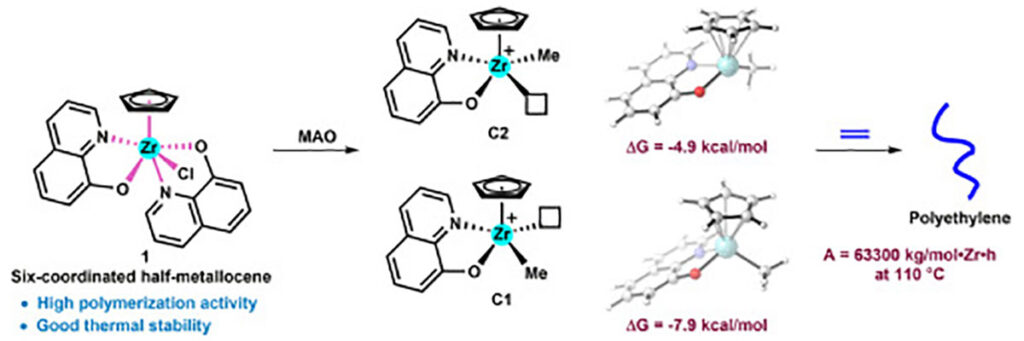
Metallocene catalysts are not a single type of catalyst, but a complete catalytic system, mainly composed of three parts: the main catalyst (metallocene compound), the co-catalyst (mainly methylaluminoxane MAO), and the support and auxiliary agent. The main catalyst determines the structural control capability of the polymerization reaction, the co-catalyst is responsible for activating the active sites and improving catalytic efficiency, and the support optimizes the dispersion and stability of the catalyst, adapting it to industrial continuous production scenarios.
What are the mainstream catalysts in the plastics industry?
>> Ziegler-Natta catalysts (Z-N catalysts)
These have the highest market share and widest application. They are technologically mature, low-cost, and resistant to impurities, suitable for large-scale production of general-purpose polyethylene and polypropylene.
Features
Multiple active centers, wide product molecular weight distribution, and relatively large performance fluctuations. Primarily used for low-end and mid-range mass production of general-purpose plastics.
>> Chromium-based catalysts (Phillips catalysts)
Specialized catalysts mainly used for high-density polyethylene (HDPE), suitable for pipe-grade, hollow-shell-grade, and high-molecular-weight polyethylene products.
Features
The plastic resin has good rigidity and a relatively high molecular weight, suitable for pressure-bearing pipes and large hollow containers, but rarely used in films and modified plastics.
>> Metallocene Catalysts (Single Active Site Catalysts)
High-end polyolefin core catalysts, with a single active site and extremely high structural controllability, allowing for precise customization of molecular structures.
Features
High product homogeneity, high purity, and high performance upper limit. Used in high-end functional plastics such as mLLDPE, mPP, POE, and high-end optical resins, and is currently a core technology for upgrading high-end petrochemicals.
Core Advantages of Metallocene Catalysts Compared to Traditional Catalysts
>> Single Active Site, Precisely Controllable Molecular Structure
Traditional catalysts have a multi-active-site structure, resulting in a wide molecular weight distribution of polymerization products, uneven distribution of comonomers, and low molecular stereoregularity, leading to problems such as large performance fluctuations and numerous defects. In contrast, the catalytic ability of all active sites in metallocene catalysts is completely consistent, allowing for precise control of four core microscopic parameters: polymer molecular weight, molecular weight distribution, short-chain branching distribution, and stereoconfiguration. The synthesized resin molecules have a highly homogeneous structure, completely overcoming the shortcomings of traditional plastics such as uneven performance and poor stability. Leveraging this advantage, metallocene catalysts can synthesize specialty polymers that cannot be prepared by traditional catalysts, such as rare and high-end resins like syndiotactic polypropylene, syndiotactic polystyrene, and cycloolefin copolymers.
>> Extremely High Catalytic Activity, Significantly Improved Production Efficiency
After activation with a co-catalyst, the metallocene catalyst exhibits catalytic activity far exceeding that of traditional catalytic systems, significantly increasing the amount of olefin monomers that can be polymerized per unit mass of catalyst. Data shows that its catalytic efficiency is 5-10 times that of traditional Ziegler-Natta catalysts, enabling polymerization reactions to be completed under lower catalyst dosages and milder reaction temperatures and pressures. This not only significantly reduces catalyst raw material costs and catalyst residues but also simplifies subsequent resin purification and impurity removal processes, effectively improving production line efficiency and yield.
>> Highly adaptable to copolymerization, offering a high degree of product customization
Metallocene catalysts exhibit exceptional adaptability to various olefin monomers and comonomers, enabling precise copolymerization of ethylene with multiple α-olefins such as 1-butene, 1-hexene, and 1-octene. The comonomer insertion is uniform and highly controllable. Technicians can adjust the ligand structure and polymerization process parameters to customize the number, length, and distribution of resin branches, precisely controlling the plastic’s flexibility, rigidity, heat resistance, sealing properties, and low-temperature resistance, perfectly adapting to the customized material needs of different industries and scenarios.
>> Low impurities and high purity, suitable for high-end applications
Traditional catalysts leave behind a large number of metal ions and catalyst impurities in the resin after polymerization, affecting the plastic’s transparency and weather resistance, and limiting its application in demanding environments such as medical, food contact, and high-end electronics. In contrast, metallocene catalysts require minimal dosage and achieve complete reaction, resulting in extremely low residual impurities in the polymerized resin. The product is high in purity, low in odor, and non-toxic. Meanwhile, the resin exhibits few internal defects and excellent uniformity, meeting high-end safety standards for food and pharmaceutical packaging, medical devices, and baby products.
What Are Core Application Areas of Metallocene Catalysts in Plastic Resins?
>> Metallocene Polyethylene Series Resins (mPE)
Metallocene polyethylene is the most mature and widely used category of metallocene catalysts. It includes metallocene linear low-density polyethylene (mLLDPE), metallocene high-density polyethylene (mHDPE), and metallocene ultra-low-density polyethylene (mULDPE), and is a core raw material for high-end plastic packaging, industrial films, and pipes. mLLDPE is currently the most industrialized product, widely used in high-end film fields such as food preservation films, heavy-duty packaging films, stretch films, and heat-sealing films. mHDPE, with its high rigidity, high toughness, and wear resistance, is used in high-end pipes, hollow containers, and precision injection molded products. mULDPE, focusing on ultra-high flexibility and low-temperature resistance, is used in cold chain packaging and flexible sealing products.
>> Metallocene Polypropylene (mPP) Series Resins
Metallocene catalysts can precisely control the stereoconfiguration of polypropylene, producing mPP resins with high isotacticity, high crystallinity, and high transparency. Its isotacticity can reach over 98%, and its melting point is increased to over 165℃, far exceeding the 160-163℃ of traditional polypropylene. Currently, mPP is mainly used in high-end transparent injection molded containers, medical nonwoven fabrics, automotive interior parts, thin-walled packaging materials, and high-temperature resistant household appliance components. With its advantages of high transparency, high strength, high temperature resistance, and low odor, it replaces traditional general-purpose PP, suitable for high-end consumer and industrial applications.
>> Polyolefin Elastomers (POE)
POE is a high-end elastomer material prepared using metallocene catalysis technology, through precise copolymerization of ethylene and high-carbon α-olefins such as octene. It combines the high elasticity of rubber with the processability of plastics, making it a core raw material for plastic modification and new energy materials. With its excellent toughening effect, low-temperature resistance, and aging resistance, POE is widely used in automotive bumpers, new energy battery separators, plastic toughening modification, wire and cable insulation layers, and high-end shoe sole materials, making it a superior alternative to traditional elastomer materials.
>> Specialty Styrene Resins and Cycloolefin Copolymers
Metallocene catalysts can precisely control the styrene polymerization process to prepare highly regular syndiotactic polystyrene. This material possesses ultra-high heat resistance, chemical corrosion resistance, and dimensional stability, making it suitable for precision electronic components and high-temperature industrial parts. Simultaneously, cycloolefin copolymers (COC/COP) synthesized using metallocene catalysis technology possess ultra-high transparency, low birefringence, and high moisture resistance, making them core raw materials for optical lenses, precision optical instruments, and medical testing consumables. These are high-end specialty plastics that cannot be mass-produced using traditional catalysts.
>> Other Functional Modified Resins
Metallocene catalysts can also be used to prepare functional polyolefin resins with low odor, low volatility, and high weather resistance. These are widely used in high-end home appliance casings, outdoor photovoltaic components, rail transit interiors, and baby and maternity plastic products—scenarios with stringent requirements for safety, weather resistance, and stability—continuously expanding the application boundaries of high-end plastics.
What Are Superior Performances of mLLDPE Compared to Ordinary LLDPE
Linear low-density polyethylene (LLDPE) is the most widely used film raw material among general-purpose plastics. Ordinary LLDPE is produced using traditional Ziegler-Natta catalysts, which suffer from poor molecular structure controllability, resulting in shortcomings such as insufficient toughness, low transparency, poor heat-sealing properties, weak low-temperature resistance, and large performance fluctuations. In contrast, metallocene linear low-density polyethylene (mLLDPE), relying on metallocene single-active-center catalytic technology, achieves comprehensive optimization of its molecular structure, resulting in all-round upgrades in microstructure, mechanical properties, optical properties, processing properties, and weather resistance.
>> More homogeneous and stable microscopic molecular structure
Ordinary LLDPE has a wide molecular weight distribution (distribution index 2.5-4.0), uneven molecular chain lengths, random and disordered distribution of short branches, and numerous long branches and molecular defects, leading to uneven stress distribution within the material. In contrast, mLLDPE has an extremely narrow molecular weight distribution (distribution index ≈ 2.0), highly uniform molecular chain length, and regular and uniform distribution of comonomer branches, with no excess long branches or structural defects, achieving ultimate homogeneity in its molecular structure. This fundamentally eliminates the performance fluctuations, susceptibility to breakage, and easy aging problems of ordinary LLDPE.
>> Comprehensive upgrade in mechanical properties, with dual enhancement in toughness and strength
mLLDPE far surpasses ordinary LLDPE in core mechanical indicators such as tensile strength, tear strength, and impact strength. Under the same density and thickness conditions, the tear strength of mLLDPE is 1.5-2 times that of ordinary LLDPE, its low-temperature impact strength is increased by more than 30%, and its tensile breaking strength is increased by about 20%. Ordinary LLDPE films are prone to cracking and damage under stretching, bending, and low-temperature conditions, failing to meet the requirements of heavy-duty packaging and high-strength films. mLLDPE, on the other hand, combines high strength and high toughness, exhibiting excellent puncture resistance, tear resistance, and tensile strength. It can be used to produce ultra-thin, high-strength films, significantly improving product durability while reducing film thickness and saving raw material costs.
>> Optimized optical properties result in higher transparency and lower haze
Ordinary LLDPE has a disordered molecular structure, uneven crystallinity, and numerous internal defects, leading to severe light scattering. Films made from this material suffer from high haze, poor transparency, and an unpleasant appearance, failing to meet the demands of high-end transparent packaging. In contrast, mLLDPE has a regular molecular arrangement, uniform crystallinity, and very few internal defects, resulting in high light transmittance and minimal scattering. Film haze can be as low as below 1.5%, significantly improving light transmittance and producing a clear and bright appearance. This makes it perfectly suited for high-end transparent food packaging, daily chemical product packaging, and high-definition protective films—applications with extremely high optical performance requirements.
>> Excellent heat-sealing performance, suitable for high-speed packaging production lines
Heat-sealing performance is a core property of packaging films. Ordinary LLDPE has a high initial heat-sealing temperature, a narrow heat-sealing temperature range, and low heat-sealing strength, and is prone to problems such as heat-sealing leakage, brittleness, and uneven sealing, making it unsuitable for high-speed automated packaging production lines. mLLDPE, on the other hand, possesses the triple advantages of low-temperature heat sealing, wide temperature stability, and high heat-sealing strength. It has a lower initial heat-sealing temperature, a wider heat-sealing temperature tolerance range, and exhibits no brittleness or shrinkage after high-temperature heat sealing, resulting in a uniform and secure seal. mLLDPE is perfectly suited for high-speed food packaging, daily chemical packaging, and cold chain packaging production lines, significantly improving packaging yield and production efficiency.
>> Stronger low-temperature resistance, aging resistance, and chemical resistance
Ordinary LLDPE has poor low-temperature toughness and is prone to brittleness and cracking in environments below -10°C, making it unsuitable for cold chain logistics and outdoor low-temperature scenarios. It also has weak weather resistance and chemical corrosion resistance, making it prone to aging, yellowing, and cracking with long-term outdoor use. mLLDPE has a stable molecular structure and excellent low-temperature resistance to cracking, capable of withstanding ultra-low temperature environments down to -40℃ while maintaining excellent flexibility and strength. It also possesses stronger resistance to UV radiation, oxidation, and acid/alkali corrosion, making it less prone to aging, deformation, and discoloration with long-term use, significantly extending product lifespan. It is suitable for demanding applications such as outdoor films, cold chain packaging, and industrial protective films.
>> More stable processing performance and higher yield
Ordinary LLDPE, due to its uneven molecular structure, experiences large fluctuations in melt flow during processing, easily leading to uneven film thickness, surface defects, bubbles, and crystal points, resulting in poor processing stability and a low yield. In contrast, mLLDPE has uniform and stable melt flow, resulting in good formability, uniform thickness, and a smooth, defect-free surface during processing. It is suitable for various processing techniques such as blown film and cast film, offering higher processing tolerance, effectively reducing production losses and improving product yield, making it suitable for large-scale industrial high-end film production.
FAQs of metallocene catalysts
1. What is the core difference between metallocene catalysts and ordinary catalysts?
The core difference lies in the structure of their active centers. Metallocene catalysts are single-active-site catalytic systems with uniform performance at all catalytic sites, allowing for precise control of the plastic molecular structure, resulting in high product homogeneity and stable performance. In contrast, traditional catalysts such as ordinary Ziegler-Natta catalysts have multi-active-site structures with significant differences in site activity, leading to disordered molecular structures in the polymerization products, performance fluctuations, and numerous defects. They are only suitable for general-purpose plastic production.
2. Why are plastics produced using metallocene catalysts more stable?
Metallocene catalysts possess single and uniform active sites. During polymerization, microscopic parameters such as molecular chain length, molecular weight distribution, and branching arrangement can be precisely controlled, resulting in a highly regular and homogeneous resin molecular structure. Simultaneously, this catalyst has high catalytic efficiency, requires low dosage, and has extremely low residual impurities in the finished product. From both microscopic structure and product purity perspectives, it completely solves the problems of uneven performance, easy aging, and easy breakage associated with ordinary plastics.
3. What are the differences in the most suitable application scenarios for mLLDPE and ordinary LLDPE?
Ordinary LLDPE offers high cost-effectiveness and is suitable for low-end applications such as general packaging films and general injection molded products. mLLDPE, with its high transparency, high strength, low-temperature resistance, and excellent heat-sealing properties, is primarily used in high-end applications, such as high-end transparent food packaging, high-speed packaging films, cold chain protective films, heavy-duty industrial packaging, and ultra-thin high-strength films.
4. What plastic resins can metallocene catalysts produce?
Metallocene catalysts are compatible with the mass production of various high-end plastic resins. Main categories include metallocene polyethylene (mLLDPE, mHDPE, mULDPE), metallocene polypropylene (mPP), polyolefin elastomers (POE), syndiotactic polystyrene, and cycloolefin copolymers (COC/COP), broadly covering films, injection molding, and elastomers.
It encompasses multiple sub-sectors, including optical materials and medical materials.
5. Why is the cost of metallocene plastics higher than that of ordinary plastics?
The R&D, synthesis, and industrial production of metallocene catalysts have high technological barriers, and the core additives and preparation processes are more expensive than traditional catalysts.
Metallocene plastics production processes require more precise control, resulting in a higher yield rate, but the initial equipment adaptation costs are higher. However, its added value, lifespan, and performance advantages far exceed those of ordinary plastics, making it a more cost-effective option in the long run.
6. Do plastics produced using metallocene catalysts meet food contact and medical standards?
Fully compliant. Metallocene catalysts catalyze reactions thoroughly, requiring very small amounts, resulting in extremely low levels of metal impurities and volatile residues in the finished product. Furthermore, the product is non-toxic, odorless, and highly safe. Compared to ordinary plastics, its purity and stability are superior, meeting national standards for food contact safety and stringent high-end safety standards for medical consumables and baby products.
7. Where does the low-temperature resistance of mLLDPE film lie?
mLLDPE has a stable molecular structure and can withstand ultra-low temperature environments down to -40℃. It maintains excellent flexibility, tear resistance, and impact resistance even at low temperatures, making it a preferred raw material for cold chain packaging and outdoor low-temperature industrial films.
8. What are the main uses of metallocene POE materials?
Metallocene POE is a high-end polyolefin elastomer that combines the processability of plastics with the high elasticity of rubber. Its core application is in toughening and modifying plastics, significantly improving the toughness and low-temperature resistance of PP and PE materials. It is also widely used in high-end industrial materials such as new energy battery separators, automotive interiors and bumpers, wire and cable insulation layers, and high-end elastic shoe soles.
9. What are core technical principle of metallocene catalysts?
Traditional Ziegler-Natta catalysts have dozens of different active catalytic sites. The polymerization rate and monomer insertion ability of different sites vary greatly, resulting in synthesized plastic resin molecules with varying chain lengths, disordered branch distribution, low stereoregularity, and poor product performance stability.
The core breakthrough of metallocene catalysts lies in their single, uniform active center structure. Through precise design of the spatial configuration and electronic effects of cyclopentadiene ligands, key parameters such as the polymerization rate, chain growth pattern, comonomer insertion position and number, and molecular chain stereoconfiguration of olefin monomers like ethylene and propylene can be precisely controlled.