
What Disposable Food Containers Can Be Made from Polypropylene PP Resin
PP resin applications for takeaway boxes, cups, bowls, trays and frozen dessert tubs.
On this page
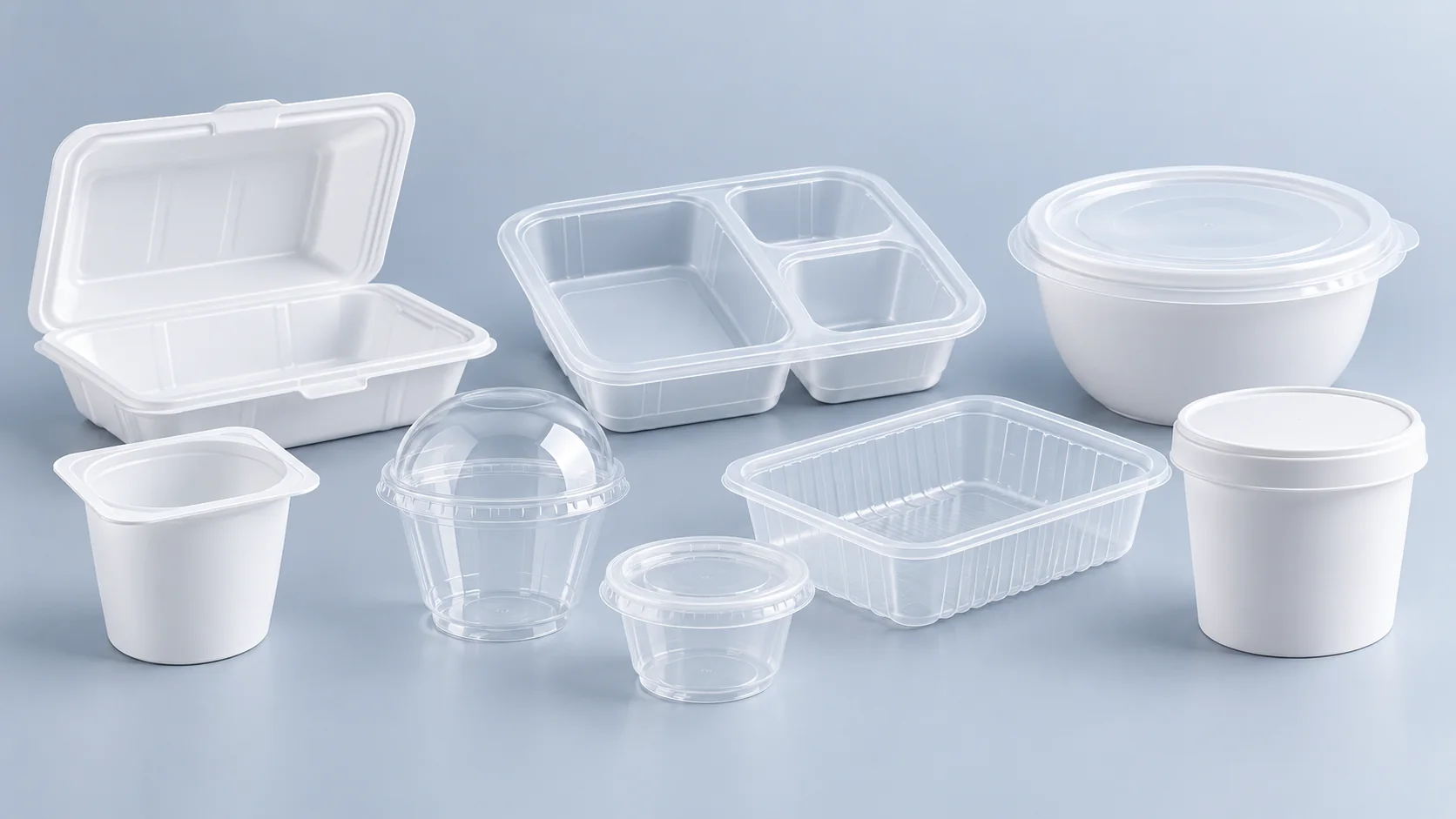
Polypropylene (PP) resin is widely used to produce disposable food containers. It can be processed into rigid takeaway boxes, thin-wall meal containers, cups, bowls, trays and small packaging components. For food packaging manufacturers, its appeal lies in the range of container designs and processing methods available with different PP grades.
A thin-wall injection-molded lunch box, a thermoformed yogurt cup and a clear dessert cup may each require a different balance of flow, stiffness, impact resistance and appearance. The intended food, filling temperature, storage conditions and market requirements also affect grade selection.
PP for Takeaway Food Boxes and Clamshell Containers
Takeaway boxes are among the most recognizable PP food packaging products. They are used for rice dishes, noodles, cooked meals, salads and other prepared foods. Designs may have a separate lid, an attached hinged lid or multiple compartments.
These containers need enough stiffness to hold their shape during filling and transport. The lid and rim must also fit consistently. If the box is intended to hold hot food, manufacturers should test how the finished container performs at the expected filling temperature.
Many takeaway boxes are produced by thin-wall injection molding. In this process, PP resin flow matters because the molten PP must fill a relatively large mold cavity through thin sections. Container design, wall thickness and mold conditions should be considered alongside the resin’s melt flow rate (MFR).
PP for Disposable Meal Prep and Portion Containers
Single-compartment and divided meal prep containers are used by restaurants, caterers and prepared-meal brands. Some are designed for immediate takeaway, while others are filled, sealed and stored before use.
The required PP properties depend on the distribution process. A container transported with hot food may prioritize dimensional stability and lid fit. A chilled meal container may need better toughness during handling and stacking. A divided tray also needs reliable filling across its corners and internal walls.
Buyers should specify whether the finished product will be used for hot filling, chilled storage, freezing or reheating. These uses should be evaluated separately when selecting a PP resin.
PP for Soup Bowls and Hot Food Containers
PP can be used to manufacture disposable bowls and containers for soups, porridge, noodles and other hot prepared foods. These packages often require a close-fitting lid and a rim that remains usable after filling.
A packaging producer should evaluate shape after hot filling, lid fit and leakage during transport, performance with oily or liquid foods, wall stiffness when lifted, the intended contact time and temperature.
PP for Yogurt Pudding and Dairy Cups
Disposable PP cups can be used for yogurt, pudding and other dairy products. Depending on the package design, a cup may be injection molded or thermoformed from PP sheet.
Manufacturers may prioritize a smooth surface, consistent cup dimensions, reliable stacking and compatibility with the selected lid or sealing system. When appearance matters, a producer may evaluate a clarified PP grade, subject to its processing and food-contact suitability.
If the cup uses a heat-sealed film lid, the PP resin alone does not determine sealing performance. The cup flange, film structure, sealing equipment and production settings must be tested together.
PP for Dessert and Snack Cups
PP resin can also be used for disposable cups holding desserts, fruit portions, dips and ready-to-eat snacks. These containers may have snap-on lids or sealed film lids.
The choice of PP grade depends partly on presentation. An opaque snack cup may call for different properties from a cup where product visibility is important. Clarified PP can improve appearance in suitable designs, although it should not automatically be expected to match the clarity of every other packaging plastic.
For smaller cups, accurate molding and consistent lid dimensions are especially important. A small change of PP resin performance in the rim can affect closure performance across a high-volume production run.
PP for Sauce Cups and Condiment Containers
Small PP cups are commonly used for sauces, dressings, dips and condiments. They may be supplied with snap-on lids or designed for film sealing.
Although these containers are small, their requirements can be demanding. The cup must fill consistently during molding, stack efficiently, and maintain a dependable seal. The selected PP material should also be evaluated for the intended food type, including whether the contents are oily or acidic, and for the expected contact conditions.
For injection-molded sauce cups, manufacturers commonly assess resin flow together with part design and cycle time. They should also check how the finished cup and lid perform after transport.
PP for Disposable Food Trays
PP can be formed into trays for prepared meals, meat products, produce and other packaged foods. Some trays are intended for chilled display, others are designed around heating or prepared-meal systems.
Thermoforming is one possible production method. In this process, PP sheet is heated and shaped into the tray. Sheet extrusion performance, forming behavior, wall thickness distribution and trimming quality all matter to the finished product.
If a tray will be sealed with a lidding film, the seal layer and equipment settings need to be evaluated as part of the complete system.
PP Resin for Ice Cream and Frozen Dessert Tubs
PP resin is also used for certain ice cream and frozen dessert tubs. Compared with a hot-food container, this application places greater attention on handling at low temperatures.
The body and lid need to withstand filling, storage, transport and opening under the intended conditions. A producer should test the finished package at the actual storage temperature, since PP grades can differ in their impact performance.
Which PP Resin Grade Is Suitable for Each Container
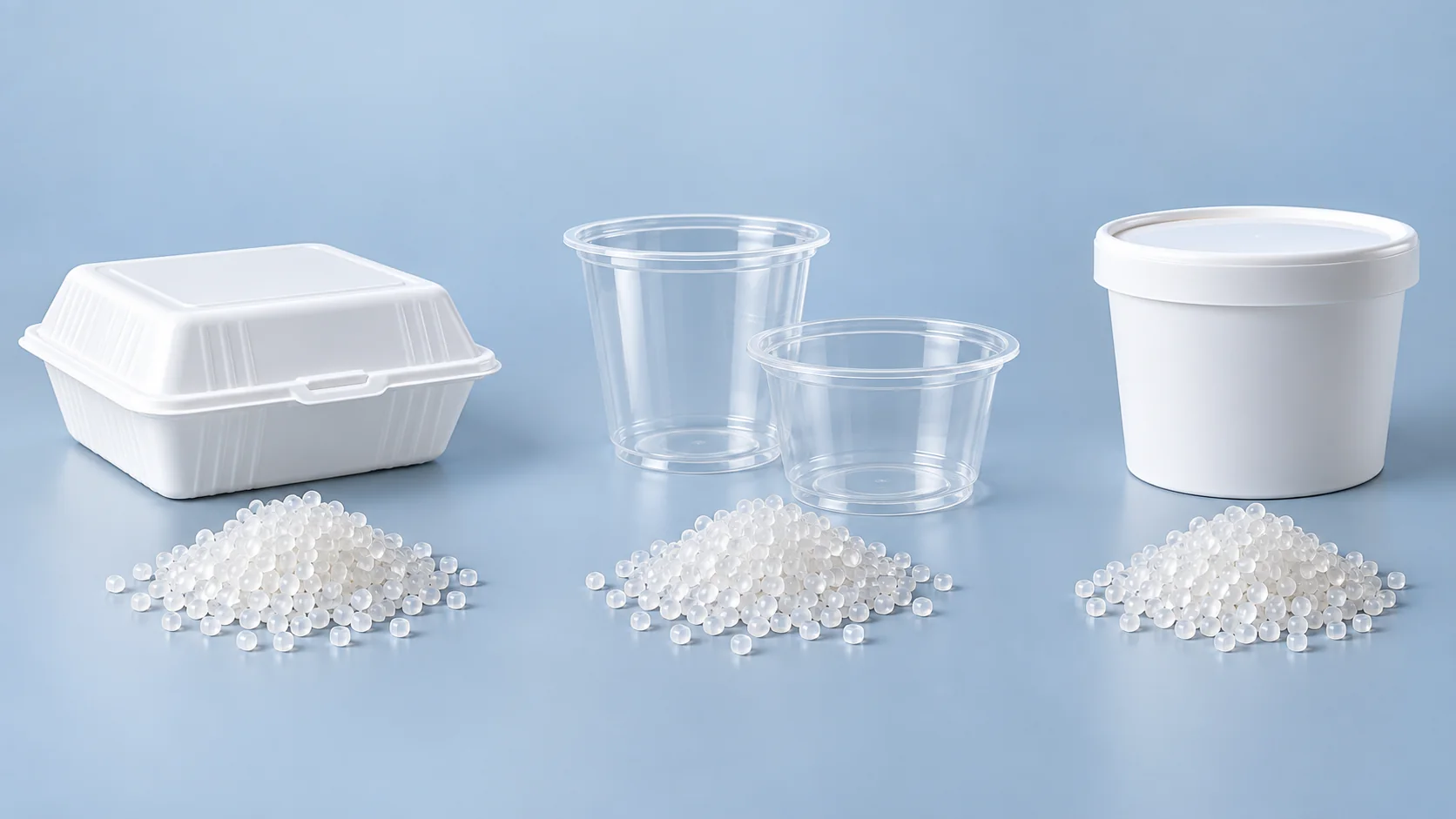
| Disposable container | Common production route | Key properties to evaluate |
|---|---|---|
| Thin-wall takeaway box | Injection molding | Flow, stiffness, dimensional consistency, lid fit |
| Meal prep container | Injection molding or thermoforming | Stiffness, impact performance, stacking, intended temperature |
| Soup bowl | Injection molding | Shape retention, rim strength, lid fit, hot-fill performance |
| Yogurt or pudding cup | Injection molding or thermoforming | Surface appearance, dimensions, sealing compatibility |
| Dessert cup | Injection molding or thermoforming | Appearance, stiffness, lid fit |
| Sauce cup | Injection molding or thermoforming | Flow or formability, stacking, sealing performance |
| Prepared-food tray | Thermoforming | Sheet processing, forming behavior, wall thickness distribution |
| Frozen dessert tub | Injection molding | Low-temperature impact performance, lid fit |
In general, PP homopolymer is often considered where stiffness is a priority, while PP copolymer grades may be evaluated where greater impact resistance is needed. The appropriate choice depends on the actual grade formulation and the finished container’s design. MFR is useful for narrowing down processing options, but MFR alone does not establish suitability.
What Must Buyers Check for Food Contact Use
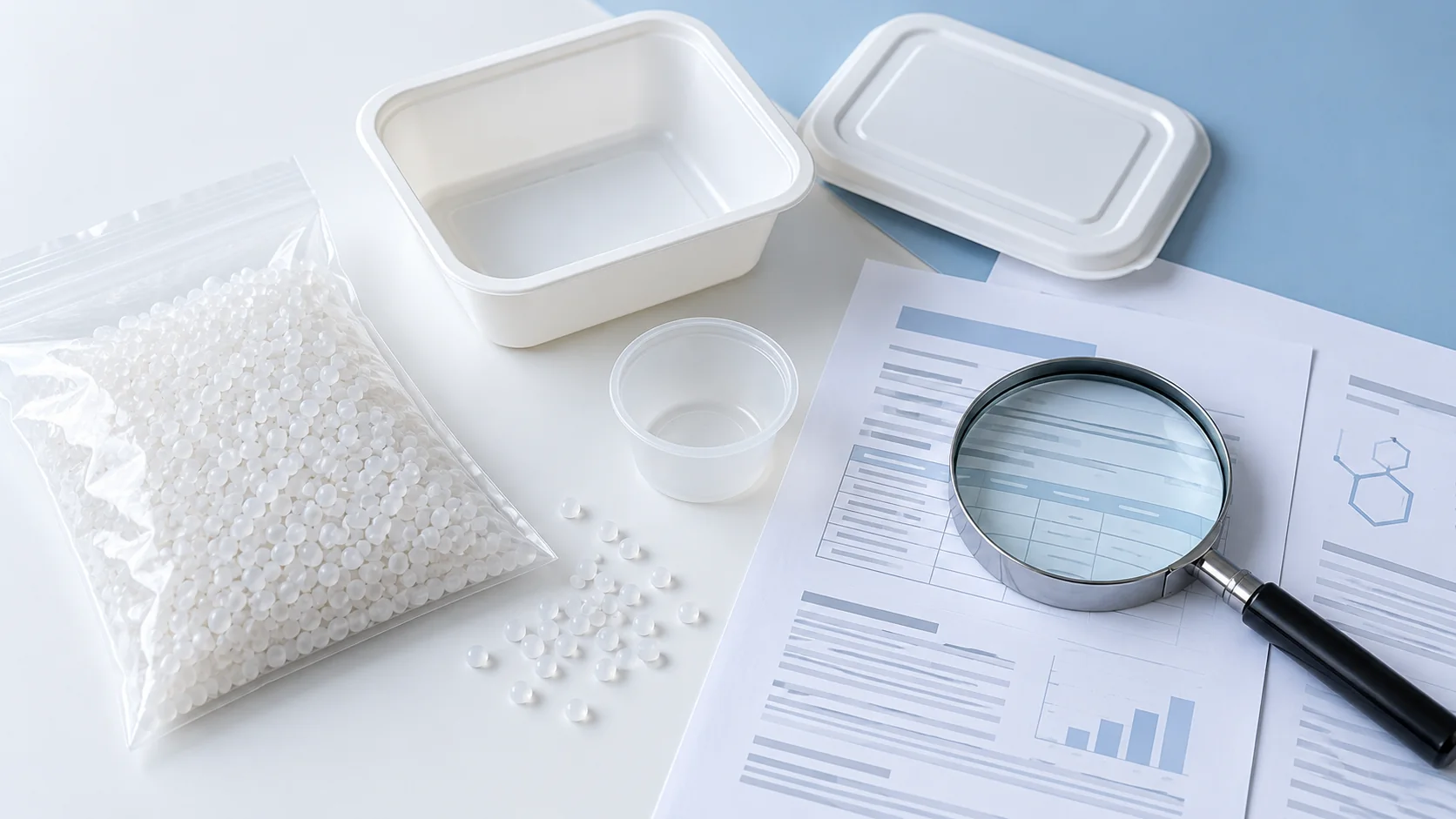
Before choosing PP resin for a disposable food container, buyers should verify food-contact suitability for the exact resin grade and its intended use. Ask the supplier for a food-contact declaration that identifies the applicable market requirements, permitted food types, contact time and temperature, and any restrictions. Then check whether the finished container will contain colorants, additives, lids or sealing films that need separate assessment. A PP resin described as “food grade” does not automatically make every container produced from it suitable for hot filling, frozen storage or microwave reheating. The container manufacturer should confirm performance and complete any required testing under the product’s actual conditions of use.
Requirements vary by destination market. In the United States, applicable provisions for olefin polymers include 21 CFR § 177.1520. In the European Union, plastic food-contact materials are subject to Regulation (EU) No 10/2011, including applicable migration requirements. Compliance of the resin does not by itself establish compliance of every finished container or packaging system.
Does PP Mean the Container Is Microwave Safe?
No. A microwave-use claim should be based on the finished container’s design and testing, including its lid, intended food and heating conditions. Some plastic containers can melt from the heat of food in a microwave oven. Plastic tableware should not be used to heat food unless it is specified as microwave-safe. For a disposable meal container, manufacturers should define whether it is intended only for serving food or also for consumer reheating.
How to Choose PP Resin for Disposable Food Containers
A useful PP resin inquiry should contain more than the words “food-grade PP.” Give the supplier enough information to recommend candidate grades and identify documentation needs:
- Container type and dimensions: Include a drawing, sample or target wall thickness if available.
- Processing method: Specify injection molding, sheet extrusion and thermoforming, or another process.
- Food and conditions of use: Describe the food type, filling temperature, storage temperature and expected contact time.
- Performance requirements: State whether stiffness, impact strength, clarity, sealing or lid fit is the main priority.
- Destination market: Identify where the finished container will be sold.
- Documents required: Request the TDS, food-contact declaration or other applicable supporting documents for the exact grade.
Common questions
FAQs
Can PP resin be used for disposable lunch boxes?
Yes. PP resin is commonly used for disposable lunch boxes and takeaway containers. The suitable grade depends on the box design, molding process, intended food and temperature conditions. Thin-wall boxes may require particular attention to resin flow and consistent filling of the mold.
Can PP be used for both hot and cold food containers?
PP can be used in products designed for either application, but one grade or finished container should not automatically be assumed suitable for both. Hot filling, chilled storage and frozen storage place different demands on the package and should be evaluated separately.
Is PP suitable for clear disposable food cups?
Clarified PP grades can be considered when improved clarity is required. The achievable appearance depends on the grade, wall thickness, processing method and container design. Manufacturers should review samples rather than select a grade based on a general “transparent PP” description.
Can PP food containers be thermoformed?
Yes. PP sheet can be thermoformed into certain cups and trays. The producer should evaluate sheet extrusion, forming behavior and thickness distribution, as well as any requirements for lidding-film sealing.
Is a food contact PP resin automatically approved for microwave containers?
No. Food-contact documentation and microwave suitability address different aspects of use. A microwave claim requires assessment of the finished container and its intended heating conditions. Check the specific grade documentation and test the complete package, including the lid where relevant.
References
- U.S. FDA, 21 CFR § 177.1520 Olefin polymers: https://www.ecfr.gov/current/title-21/chapter-I/subchapter-B/part-177/subpart-B/section-177.1520
- European Union, Regulation (EU) No 10/2011: https://eur-lex.europa.eu/eli/reg/2011/10/2025-03-16
- U.S. FDA, Microwave Ovens: https://www.fda.gov/radiation-emitting-products/resources-you-radiation-emitting-products/microwave-ovens
- U.S. FDA, Melamine in Tableware Questions and Answers: https://www.fda.gov/food/economically-motivated-adulteration-food-fraud/melamine-tableware-questions-and-answers