
Home » HDPE PE100
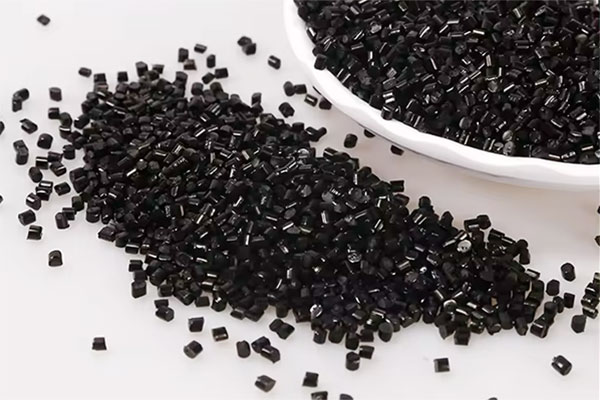
What Is PE100
HDPE PE100 is the core grade of HDPE pipe grade and a dedicated grade for conventional high-pressure pipelines. Its core indicator is a minimum required strength (MRS) of 10MPa, meaning it can stably withstand a conveying pressure of 10MPa under conditions of 20℃ and a 50-year service life. It also needs to meet key requirements such as a density ≥0.940kg/m³, melt flow rate suitable for pipe processing, and elongation at break >350%, conforming to international standards such as ASTM PE4710 and ISO 12162.
What Are HDPE PE 100 Resin for Sale in our company
| Items | Brands | Melt Index | Density | Applications |
| Borstar® HE3490-LS | Borouge | 0.25 | 0.945 | Pressure pipes |
| HE3488LSW | Borouge | 0.27 | 0.96 | Pressure pipes |
| YGH-041T | Sinopec | 0.27 | 0.960 | water pipes, gas pipes, drain, discharge pipes of seawater, thin-wall bellows and industrial pipes |
| Hostalen 23050 B | LyondellBasell | 0.23 | 0.95 | Conduit, Drainage Pipe, Sewer Pipe |
| P6006 | Sabic | 0.22 | 0.959 | Gas pipelines |
| P6006NA | Sabic | 0.23 | 0.949 | Gas pipelines |
| P6006AD | Sabic | 0.22 | 0.959 | Gas pipelines |
| XS10 Series | Total | 0.3 | 0.959 | Gas pipelines |
| P600(BL) | KPIC | 0.23 | 0.96 | Water supply, gas pipelines |
| 6100 | SK | 0.28 | 0.952 | Water supply |
| 7100M | Lotte | 0.24 | 0.952 | Water supply, gas pipelines |
| HZ7700M | Prime | 0.27 | 0.949 | Water supply, gas pipelines |
| SP5505(BK) | Prime | 1 | 0.95 | Pipe fittings |
| CRP 100 Series | LyondellBasel | 0.22 | 0.959 | Water supply, gas pipelines |
| TUB121 Series | Ineos | 0.45 | 0.959 | Water supply, gas pipelines |
| TUB125 Series | Ineos | 0.45 | 0.959 | Gas pipelines |
| A6060R | Sabic | 0.3 | 0.959 | Water supply, gas pipelines |
| Tasnee 100 Series | TASNEE | 0.22 | 0.959 | Water supply, gas pipelines |
| 8001 | Taisox | 0.24 | 0.948 | Water supply, gas pipelines |
| AM3245PC | IRPC | 0.25 | 0.956 | Water supply |
| P5300 | HALDIA | 0.25 | 0.948 | Water supply, drain pipe |
| 46GP003 | RELIANCE | 0.3 | 0.946 | Water supply, drain pipe |
Would Like The Quotation
Leave more about your requirements, such as, brands, models, quantity, package, country, etc.
Why Choose HDPE PE 100 for the producing of pipes
In recent years, plastic pipes have been popularized in construction and municipal water supply and drainage, gas, wire and cable casings, industrial pipes, farmland drainage and irrigation pipes and other fields. HDPE pipes are the preferred material for gas pipes and water supply pipes due to their low friction coefficient, low temperature resistance, good toughness, good insulation properties, corrosion resistance, and good resistance to slow crack growth.
PE100 pipe resin is called the third generation polyethylene (PE) pipe resin. At present, the special resin for PE100 grade pipes is mainly bimodal HDPE, whose relative molecular weight has a bimodal distribution. The low molecular weight part provides better processing performance, and the high relative molecular weight part provides better mechanical properties.
The special resin for PE100 grade and above high-pressure pipes has greatly improved transportation safety and transportation capacity by virtue of its excellent rapid crack propagation (RCP) resistance, slow crack growth (SCG) resistance and excellent long-term stability. , widely used in water supply, drainage and gas fields.
PE 100 polyethylene pipe is one of the newest and best polyethylene materials with unique physical and operational properties, allowing it to withstand greater pressures due to greater density, lighter weight and thickness. HDPE PE100 actually solves the problem of polyethylene pipes and fittings because it is UV resistant.
Polyethylene pipes produced from PE100 grade materials are relatively lighter and stronger than other grades of polyethylene materials, making them cost-effective as well. Polyethylene pipe produced from these materials will be lighter than the same pipe produced from lower grade materials.
What Characteristics to Consider when Buy HDPE PE100 Resin
Of all the properties required for PE100, when we consider pipe surface defects and stress concentrations on complex-shaped pipe fittings, the most important for pipe life should be resistance to slow crack growth (SCG). Large-diameter, thick-walled pipes have increasingly higher requirements for high working pressure and rapid crack propagation (RCP) without dents. The continuous improvement of resin performance will help the continuous expansion of PE pipes, meet new and more demanding installation methods, and help improve the safety margin of PE pipe systems.
In addition to SCG, rapid crack propagation (RCP) requirements for high working pressure and dent-free performance are also increasingly high for large-diameter thick-walled pipes.
Another important factor in the development of PE 100 resins is the ability to resist oxidative degradation over long periods of time. Polyethylene pipes are affected by natural factors such as light, oxygen, and moisture in the environment. They gradually age and their performance gradually decreases, thus affecting their service life.
HDPE pipes generally need to be able to be used for a long time, and one of the important indicators is slow crack growth (SCG) resistance. The molecular weight and distribution, short chain branch content and distribution are important factors affecting the SCG resistance of HDPE PE100.
FAQs of HDPE PE100 Resin
1. PE100 VS PE80
Pressure Rating: PE100 can withstand up to 10MPa, offering strong high-pressure resistance, while PE80 only reaches 8MPa, suitable only for low- to medium-pressure applications.
Tensile Strength: PE100 has a tensile strength of 23-28MPa, offering superior strength. PE80 has a tensile strength of 19-22MPa, offering moderate strength.
Application Scenarios: PE100 is primarily used for high-pressure applications such as high-pressure drinking water, natural gas, and industrial high-pressure pipelines. PE80 is more suitable for low-pressure applications such as low-pressure irrigation, sewage, and indoor branch pipes.
Selection Recommendation: Choose PE100 for conventional high-pressure transmission (e.g., urban main pipelines, high-pressure water supply). Choose PE80 for low-pressure transmission and low-cost requirements (such as farmland irrigation, indoor branch pipes).
2. PE100 VS PE112
Pressure Rating: PE100 (MRS 10MPa), PE112 (MRS 11.2MPa). PE112 has stronger high-pressure tolerance and can be adapted to higher pressure conditions (such as high-pressure hydrogen-blended gas pipelines).
Processing Performance: PE100 has moderate processing fluidity and is suitable for conventional pipeline equipment. PE112 has higher processing requirements, requires specialized equipment, and has slightly higher processing costs.
Procurement Cost: PE112 is 10%-15% more expensive than PE100. Blindly choosing PE112 when there is no high-pressure requirement will increase costs.
Selection Recommendation: Choose PE100 for conventional high-pressure conditions (such as conventional natural gas, high-pressure water supply). Choose PE112 for high-pressure and special media (such as hydrogen-blended gas).
3. PE100 VS PPR
Material: PE100 is high-density polyethylene with good flexibility. PPR is random copolymer polypropylene, which is relatively more rigid.
High-Temperature Resistance: PE100’s long-term operating temperature does not exceed 60℃ and it is not resistant to high temperatures. PPR’s long-term operating temperature can reach 70℃ and it can withstand hot water transportation.
Applications: PE100 is mostly used in municipal pipe networks, natural gas, and industrial cold water pipes. PPR is mainly used in indoor hot water and heating pipes.
4. PE100 VS PVC Pipe Grade
PE100: Stronger impact resistance, aging resistance, and corrosion resistance, good flexibility. Not easily brittle, recyclable, non-toxic (suitable for drinking water). However, it has poor high-temperature resistance and its cost is slightly higher than PVC resin.
PVC: Low cost, high rigidity, slightly better high-temperature resistance than PE100. However, it is brittle, has poor impact resistance, contains plasticizers (some models are not suitable for drinking water), is not recyclable, and has poor aging resistance.
5. What is the difference between PE100 black and PE100 natural-colored granule?
PE100 black granule: Contains uniformly dispersed carbon black, offering excellent UV resistance and anti-aging properties. Suitable for outdoor exposure and deep underground burial, requiring no additional protection.
PE100 natural-color granule: Contains no carbon black, with a natural color appearance. Its anti-aging properties are moderate, suitable for indoor and light-protected environments, requiring strict light-protection storage.
6. What Are Advantages of PE100 Resin?
One of the distinguishing features of HDPE PE100 black resin is its excellent mechanical properties. Features high tensile strength and excellent impact resistance to withstand harsh working conditions, including extreme temperatures and corrosive environments. Additionally, its inherent flexibility and ductility enable it to adapt to dynamic stresses without compromising performance, making it the material of choice for structural applications.
Another significant benefit of PE 100 resin is its excellent chemical and abrasion resistance. This elastomeric material maintains its integrity regardless of exposure to acids, bases or solvents, providing long-term reliability and peace of mind to manufacturers in industries such as agriculture, construction and water management.
Additionally, PE 100 resin is known for its light weight and ease of processing. Its low density and melt flow properties facilitate efficient production processes, resulting in cost savings and increased productivity for manufacturers. Whether extruded, molded or welded, PE 100 resin is suitable for a variety of processing techniques, enabling the creation of complex geometries and custom components.
7. Why is PE 100 raw material usually presented as black granules?
>> Necessity of carbon black additives
UV protection: Carbon black is the most effective ultraviolet (UV) stabilizer, which can absorb >99% of UV radiation and prevent PE 100 from photo-oxidative degradation during long-term outdoor use.
Extended life: PE pipes without carbon black may become brittle in 2-3 years under direct sunlight, while PE 100 pipes containing carbon black can last more than 50 years.
Cost-effectiveness: Compared with other UV stabilizers, carbon black is cheaper and more effective.
>>Industry standard requirements
ISO 4427/EN 12201 standard: Clearly requires that PE pipes used for outdoor buried or exposed environments must contain 2-3% carbon black.
Color identification: Black has become the industry’s universal color, making it easier to identify the purpose of the pipe.
>> Other functional optimizations
Improved thermal conductivity: Carbon black can improve the thermal conductivity of PE, which is beneficial for welding processing.
Static dissipation: Prevent static electricity accumulation when pipelines transport flammable media, especially gas pipes.
Fine-tuning of mechanical properties: Appropriate amount of carbon black can slightly improve tensile strength and wear resistance.
8. Is there any other of PE100 resin?
Blue or green pipes: Usually PE 80 or non-pressure pipes, when the carbon black content is insufficient, it can not meet the long-term strength requirements of PE 100 Black.
White pipes: Need to add a lot of TiO2, the cost increases by more than 30% and the UV resistance is still weaker than carbon black.
9. What is the service life of PE100 pipes?
PE100 pipes are designed for a service life of 50 years (under 20℃ and 10MPa pressure conditions). Actual service life is affected by three core factors:
Raw Material Quality: Uses genuine original PE100 material, free of recycled and blended materials, resulting in more stable performance.
Operating Conditions: Avoid prolonged overpressure, high temperature (>60℃), and strong UV radiation; keep away from highly corrosive media.
Processing and Installation: Processing temperature controlled between 190-220℃, avoid pipe damage during installation. Ensure proper joint connections.
10. Can PE100 pipes be used for drinking water transportation?
Yes, PE100 is one of the preferred materials for drinking water pipelines, but it must meet three core conditions:
Raw material compliance: PE100 resin that meets drinking water hygiene standards must be used, odorless, non-toxic, and free of harmful additives.
Testing compliance: COA and SDS must be provided to ensure that the content of heavy metals and harmful substances complies with national standards.
Processing compliance: Contamination must be avoided during processing, and the pipes must be free of burrs and impurities after forming, with tight joints to prevent secondary contamination.
- Email: sales@chemategroup.com
- Tel: 0086-371-60921621
- Whatsapp: +86 18624832876
- Wechat: +86 18624832876
- ADD: NO.80 PUHUI ROAD,ZHENGZHOU CITY, HENAN PROVINCE, CHINA