
How to Choose PET Resin for Preform Manufacturing
A practical selection workflow for factories evaluating bottle-grade PET: define the bottle type, confirm the IV value, compare the resin manufactured by different brands, verify the process and qualify the finished bottle.
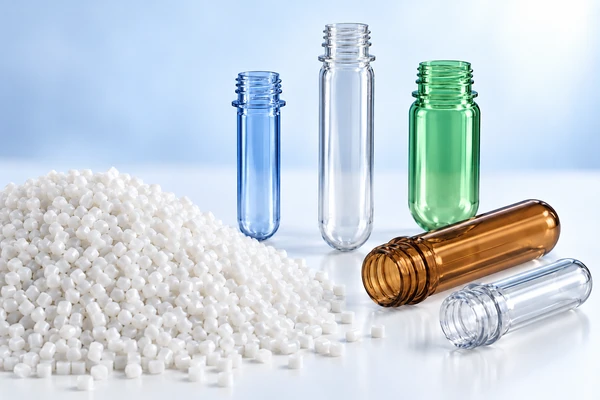
Choosing PET Resin Is a Production Decision
The right PET resin for preform manufacturing is the material that can be processed consistently on your equipment and qualified for your final package. A familiar brand, a matching IV value or a low price can help narrow the shortlist, but none independently establishes suitability.
This guide is intended for preform injection molders, integrated bottle manufacturers and beverage companies with their own preform production.
Start with a written requirement: “We need PET resin for this preform drawing and bottle application, meeting these tests, on this production line.” That is more useful than asking only for “the best PET resin.”
1. Define the Final Bottle Application
Identify what the final bottle will hold and how it will be filled, transported and used. A still-water bottle, a pressurized soft drink bottle and a hot-filled bottle are different selection tasks.
Describe the complete use case before comparing grades:
- Still water: define appearance, taste-related requirements, container size and handling tests.
- CSD: specify carbonation conditions and the bottle qualification requirements related to pressure and storage.
- Hot-fill: record filling temperature, time, cooling sequence and bottle manufacturing process.
- Edible oil: define capacity, closure, stacking and distribution conditions.
2. Document Your Approved Production Baseline
If your preform factory already runs an approved material, document it before considering alternatives. Your baseline should include the current brand and grade, relevant TDS, preform drawing, neck finish, preform weight and accepted quality limits. Record normal output, cycle time and reject rate under stable conditions.
Also identify why a change is being considered (supply continuity, purchasing cost, a new bottle design or a recurring quality problem). Different objectives lead to different acceptance criteria. A supply backup project should demonstrate that the alternative PET resin for preform manufacturing can meet the existing package specification reliably.
Keep a reference lot or retained samples where your quality system allows it. This helps distinguish a material change from a process change when comparing later results.
3. Use IV Value as a Screening Parameter
Intrinsic viscosity is a useful resin characteristic, but it is not a complete application specification. Compare the nominal value, tolerance, units and test method with those of your approved material. Avoid treating every resin described as “IV 80” as identical.
Many water bottle grades have nominal IV around 0.80 dL/g. Other bottle-grade materials use different values according to their design and intended use. Higher IV is not a universal sign of better quality, and hot-fill suitability cannot be established from IV alone.
When evaluating a new grade, review the supplier’s processing recommendations and measure the properties relevant to your production. If preform IV is part of your control plan, use consistent sampling and testing so that resin-to-preform comparisons are meaningful.
4. Compare the Complete Resin Specification
Read the TDS as a set of characteristics rather than a single headline number. Check whether the figures are typical values or contractual specification limits, and note the document revision. An old sheet or a sheet for a similarly named product can lead to the wrong comparison.
| Characteristic | Useful comparison question |
|---|---|
| IV and tolerance | Is the candidate consistent with our approved material and qualification plan? |
| Acetaldehyde | What is specified for the resin, and what must be controlled in the finished package? |
| Color and appearance | Are methods and limits comparable, and what does the actual preform look like? |
| Moisture | What is the shipment specification, and how will processing readiness be measured after drying? |
| Thermal and reheat characteristics | What product-specific information is available for our injection and blowing process? |
For water packaging, discuss acetaldehyde requirements with your quality team. Resin AA and finished-preform AA are separate checkpoints. Heating history during injection molding also matters. Do not assume that a resin certificate alone establishes the taste performance of the packaged water.
5. Check Drying and Material Handling
PET is hygroscopic, it absorbs moisture, including within the pellets. Inadequate drying before melt processing can cause hydrolytic degradation and loss of properties. A drying setup therefore needs verification rather than relying only on the displayed temperature.
Review the selected grade’s instructions for drying temperature, residence time, dry-air conditions and throughput. Inspect the hopper, dryer maintenance and transfer route. Check for moisture pickup between the drying outlet and the injection machine.
Follow the resin manufacturer’s processing guide instead of applying one universal temperature and time to all PET materials. Record actual production conditions and verify the agreed moisture endpoint with an appropriate measurement method.
6. Match Reheat Behavior to Your Bottle Line
In a two-stage bottle process, preforms are reheated before stretch blow molding. A fast-reheat resin is a candidate when the line and package design can benefit from its reheat behavior, but the label does not prove a shorter cycle or lower energy consumption on your equipment.
Evaluate oven settings, preform temperature distribution, bottle appearance and material distribution. Compare at equivalent acceptable bottle quality and throughput. Any energy claim should come from a measured trial with defined boundaries, such as oven electricity per accepted bottle.
If you sell PET preforms to several blow-molding customers, include representative customer lines in your qualification plan. A preform that works on one oven may require different settings elsewhere.
7. Review Food-Contact and Traceability Documents
Request documentation identifying the exact resin grade and manufacturing source. Confirm that the supporting food-contact information covers the intended market and use conditions. A generic “food grade” statement is less useful than a document that your quality team can review.
- TDS: technical characteristics and, where available, specification limits and methods.
- COA: reported results and identification for the supplied batch.
- SDS: handling and safety information.
- Food-contact information: applicable declarations and restrictions for the intended use.
Resin documentation and finished-package compliance are related but different tasks. Account for your additives, processing, container design and contact conditions when deciding what finished-package assessment is required.
8. Evaluate Supplier and Delivery Conditions
A PET resin can perform well in a trial yet be impractical to purchase regularly. Check the supply arrangement alongside the technical assessment: source consistency, minimum quantity, packaging, destination, delivery schedule and the paperwork included in the offer.
Ask how manufacturer and lot identity will be shown on the packaging and commercial documents. If a brand or source changes, require an agreed review rather than treating the change as automatically acceptable. Keep a documented procedure for any substitution.
For imported material, compare quotations on the same commercial basis. Clarify freight, insurance where applicable, destination charges, lead time and payment terms. A lower headline price may not mean a lower delivered cost.
9. Run a Controlled Production Trial
Create a trial plan before the material arrives. Define acceptance limits, sampling locations, required test equipment and responsibility for approval. Begin with controlled conditions, then adjust settings according to the candidate’s processing guidance while documenting changes.
- Incoming check: verify packaging, label, lot number and paperwork.
- Process preparation: confirm dryer operation and segregate the candidate material.
- Preform assessment: inspect dimensions, neck finish, weight, appearance and agreed material properties.
- Bottle assessment: evaluate the tests relevant to the intended package, such as top load, drop, leak or pressure-related tests.
- Repeatability: review quality over the agreed running period and additional lots where needed.
A trial approval should name the grade, source, package designs and process conditions covered. Keep retained samples and the test record according to your quality procedure.
10. Compare Cost per Accepted Preform
Price per metric ton is only part of the purchasing decision. Compare the material cost for the approved preform weight, then account for losses, energy, output and quality-related costs on a consistent basis.
Define yield as accepted preform mass divided by consumed resin mass for this calculation. Treat recoverable regrind and scrap credits consistently. Add measured energy and other conversion costs separately if comparing total production cost.
Do not reduce preform weight solely to offset resin price. Lightweighting changes need their own bottle performance validation and customer approval where applicable.
11. Troubleshoot Before Rejecting a Resin
Haze, brittleness, black specks or variable weight deserve a structured investigation. A defect appearing after a resin change makes the material a candidate cause, but does not establish it as the only cause. Review the line history and where the defect appears.
| Observed issue | Checks to include |
|---|---|
| Haze or whitening | Drying records, thermal history, cooling, preform thickness and location of the defect. |
| Brittle preforms | Moisture control, residence time, processing history and agreed material tests. |
| Black specks | Incoming material, contamination, equipment cleanliness and degraded material in the melt path. |
| Bottle deformation | Bottle design, material distribution and actual fill / cooling conditions. |
| Unstable weight | Feed consistency, machine controls, mold / hot-runner condition and process settings. |
Document the resin lot, photographs, sample results and settings. Compare with a verified baseline where feasible. This makes a supplier discussion more productive than reporting only that “the resin is bad.”
12. Build a Clear PET Resin Inquiry for Your Preform Manufacturing
A detailed inquiry helps a supplier identify relevant materials and prepare a comparable offer. You do not need to know the replacement grade in advance, but you should describe the package and the current production requirements.
- Final bottle application, capacity and filling conditions
- Preform drawing or weight, neck finish and injection equipment
- Current brand / grade, TDS and required specifications
- Trial objective and the acceptance tests to be used
- Order quantity, expected consumption and purchasing schedule
- Destination country / port and required documents
Chemate Group supplies bottle-grade PET resin for preform manufacturers. Share your approved material and purchasing requirements so that we can discuss candidate grades and confirm the available supply arrangement.
Explore our PET resin for preforms for application options and an inquiry checklist.
PET Preform Resin Selection FAQs
Should I always choose a higher-IV resin?
No. Select the characteristics needed for the package and process. A higher number does not independently establish better molding, better heat resistance or lower production cost. Review the complete grade information and trial results against a defined baseline.
Can a fast-reheat grade reduce our production cost?
It may be worth evaluating, but the result depends on the oven, preform design, settings and acceptable bottle quality. Measure energy and output during a controlled comparison. Do not assume a stated reheat feature guarantees a particular saving.
How do we approve a new PET resin supplier?
Review the exact grade and source, technical and food-contact documents, traceability and commercial conditions. Qualify the candidate material on your production line and final package. Record the approved scope and agree how future grade or source changes will be handled.
Can matching IV values prove that two grades are equivalent?
No. Grades can differ in composition, additives, thermal behavior, color or reheat characteristics even when their nominal IV values match. Compare manufacturer information and relevant production tests before treating a candidate as an approved alternative.