
Home » What Is PET Preform
What is PET Preform?
PET preform, short for Polyethylene Terephthalate Preform, is an intermediate product manufactured through injection molding, possessing a specific weight, geometry, and wall thickness distribution. It typically appears as a test tube, with a closed hemispherical bottom at one end, a threaded neck at the other, and a tubular body in the middle. It is the “pre-production” or “embryo” form of all PET plastic bottles we commonly see in our daily lives, such as mineral water bottles, cola bottles, and juice bottles. Essentially a “semi-finished product,” it needs to be heated and expanded into the final PET bottle through a subsequent stretch blow molding process.
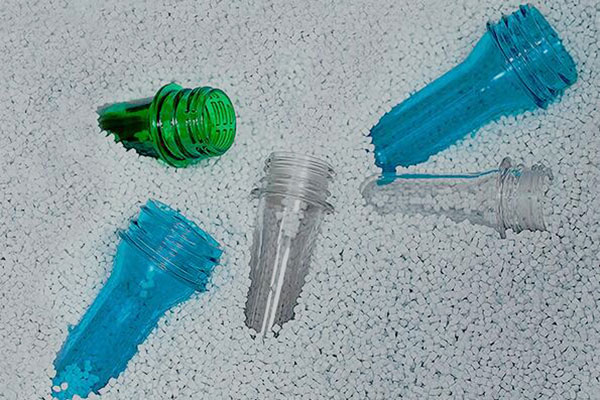
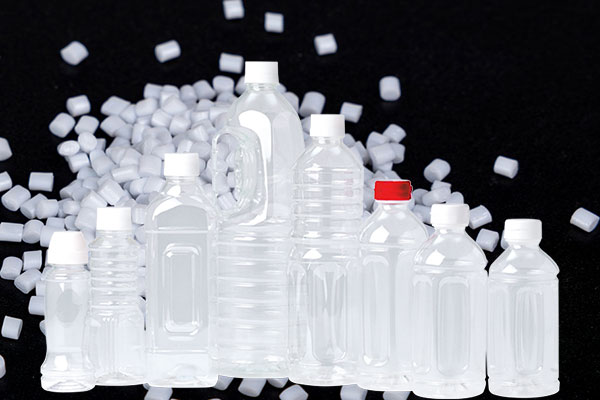
What Is the Relationship between PET Preforms and Polyester Chips
PET Preforms are a direct downstream product of bottle-grade PET chips. The raw material for manufacturing preforms is high-viscosity, low-acetaldehyde-content bottle-grade PET chips treated with solid-phase polycondensation (SSP). The properties of the preform (such as mechanical strength, transparency, and gas barrier properties) are primarily determined by the inherent properties of the bottle-grade polyester chips. Therefore, it is essential to select polyester chips based on your specific needs. If you are unsure which polyester chip to choose, please tell us which type of bottle you wish to produce, and we will recommend the most suitable model.
Hot Sale PET Chips for Bottles Manufacturing in Our Company
| Grades | Models | Brands | IV Value (dl/g) |
| Water Bottle Grade PET | CZ-302 | JADE | 0.80±0.02 |
| CZ-302L | JADE | 0.76±0.02 | |
| WK-801 | Wankai | 0.80±0.015 | |
| YS-W01 | Yisheng | 0.80±0.015 | |
| BG80 | Yizheng | 0.80±0.02 | |
| CR-8816 | China Resources | 0.806 | |
| CR-8816L | China Resources | 0.76±0.02 | |
| TH102 | Tunhe | 0.800±0.015 | |
| Oil Bottle Grade PET | CZ-318 | JADE | 0.850±0.02 |
| WK-821 | Wankai | 0.83±0.015 | |
| YS-Y01 | Yisheng | 0.83±0.015 | |
| BG802 | Yizheng | 0.83±0.02 | |
| TH102C | Tunhe | 0.840±0.015 | |
| Hot Filling Bottle Grade PET | CZ-333 | JADE | 0.850±0.02 |
| WK-811 | Wankai | 0.79±0.015 | |
| WK-811L | Wankai | 0.76±0.015 | |
| YS-H01 | Yisheng | 0.78±0.015 | |
| CR-8839 | China Resources | 0.80±0.02 | |
| BG801 | Yizheng | 0.80±0.02 | |
| TH105 | Tunhe | 0.750±0.015 | |
| CSD Bottle Grade PET | CZ-328 | JADE | 0.850 ± 0.02 |
| CZ-328A | JADE | 0.850 ± 0.02 | |
| WK-851 | Wankai | 0.88± 0.015 | |
| WK-881 | Wankai | 0.87± 0.015 | |
| YS-C01 | Yisheng | 0.875±0.015 | |
| CR-8828 | China Resources | 0.850 ± 0.02 | |
| BG85 | Yizheng | 0.875±0.015 | |
| BG85H | Yizheng | 0.875±0.015 | |
| TH104 | Tunhe | 0.870±0.015 |
What are the Core Parameters of PET Preform?
Preform weight. These are the most fundamental parameters, directly affecting the amount of raw materials used and the cost. The designer’s goal is to minimize the preform weight while ensuring bottle performance. Too light a preform leads to insufficient strength, while too heavy a preform results in material waste.
Wall thickness and injection point distribution. The preform wall thickness is not uniform. Typically, a taper is designed from the neck to the bottom to match the stretch ratio of different areas during blow molding, ensuring a relatively uniform final bottle wall thickness. Local thickening or thinning in critical areas requires precise calculation.
The ratio of preform length to diameter. This affects the material stretching behavior during blow molding and the accuracy of bottle shape reproduction. A higher length-to-diameter ratio is suitable for producing slender bottles but presents challenges for blow molding.
Stretch ratio. This includes the axial stretch ratio (bottle body length to preform length) and the radial stretch ratio (bottle diameter to preform diameter). The total stretch ratio is a key indicator of the degree of molecular chain orientation and usually needs to be controlled within a reasonable range to ensure optimal mechanical properties and transparency of the bottle.
How are PET Preforms Produced?
Preform manufacturing is a high-precision, highly automated injection molding process with extremely stringent requirements for process control.
Raw Material Pretreatment
Bottle-grade PET chips are hygroscopic and must be thoroughly dried before processing. Typically, a dehumidifying dryer is used to lower the air dew point to below -40°C, drying at 150-180°C for 3-4 hours to reduce the chip moisture content to extremely low levels. Any trace amount of moisture will cause hydrolysis and degradation during high-temperature processing, leading to molecular chain breakage, decreased intrinsic viscosity, and consequently, brittleness and a sharp deterioration in mechanical properties.
Plasticizing and Melting
The dried PET chips are drawn into the injection molding machine barrel. Under the combined action of the screw’s rotation and shearing, and external heating, the chips are heated to a molten state of 250-285°C, becoming a homogeneous melt.
Metering and Injection
As the screw rotates and retracts, a certain amount of melt accumulates. Then, the melt is injected at high pressure and high speed into the closed, cooled preform mold cavity. Injection speed and time require precise control to ensure complete mold filling without generating excessive shear stress.
Pressure Holding and Cooling
After injection, the screw maintains a certain pressure to fill the cavity with the voids created by the melt’s cooling and shrinkage, preventing shrinkage marks and vacuum bubbles. The mold (usually a hot runner system) is circulated with cooling water to rapidly cool and solidify the melt.
Mold Opening and Ejection
Once the preform has fully cooled and solidified, the mold opens, and the ejector mechanism ejects the formed preform. A complete injection molding cycle typically takes between 15-30 seconds, depending on the weight of the preform and the number of cavities in the mold.
How are Preforms Processed into Bottles?
Reheating and stretch blow molding is a process that transforms a solid preform into a bidirectionally oriented, high-performance bottle.
Reheating. The preform is fed into the heating furnace of the blow molding machine. Infrared heaters uniformly and precisely heat its body to an optimal orientation temperature range above the glass transition temperature. At this point, PET preform is in a highly elastic state with optimal stretching properties. The neck is not heated due to a protective sleeve.
Stretching and Blow Molding. The heated preform is quickly transferred to the blow molding die.
Mechanical Stretching. A stretching rod is rapidly lowered from above, inserted into the preform, and axially stretches it from the bottom upwards.
High-pressure blow molding. Almost simultaneously with stretching, high-pressure clean air is injected into the preform, forcing it to adhere tightly to the cold blow molding cavity, achieving radial expansion.
In this “biaxial stretching” process, the molecular chains of PET are forced to highly orient and align in both axial and radial directions, forming a dense network structure. This process significantly improves the tensile strength, toughness, impact strength, transparency, and gas barrier properties of the finished product. Subsequently, rapid cooling and solidification within the mold yields the final PET bottle.
What Are Main Application Areas of PET Preforms
Bottled Water Industry
This is the earliest and largest application market for PET preforms. The requirements for preforms vary slightly depending on the characteristics of different beverages.
>>> Drinking water bottles: Mineral water, purified water, mineralized water
Preform Requirements: Primarily lightweight and low-cost. Since they do not need to withstand pressure, preforms can be designed to be lighter and thinner to achieve maximum material savings. Extremely high transparency is also required to present the clarity of the water.
>>> Carbonated Soft Drinks bottles: Cola, Sprite, Fanta, and other sodas
Preform Requirements: Preforms must be designed to withstand the internal pressure generated by carbon dioxide in the beverage (typically 4-6 atmospheres). Therefore, excellent pressure resistance, stress crack resistance, and high strength are required. The bottle bottom design is particularly critical, typically petal-shaped or arched to distribute pressure.
>>> Hot-Filled Beverages bottles
Preform Requirements: Fruit juices, tea drinks typically use hot-filling processes at 85°C-95°C. This requires the use of heat-resistant preforms. These preforms are usually specially designed or copolymerized to ensure the blown bottles do not deform at high temperatures.
>>> Beverages Bottles Requiring High Barrier Properties
Preform Requirements: Products such as fruit juices are prone to oxidation and require higher oxygen barrier properties. Sometimes multi-layer preforms are used or barrier agents are added to the raw materials.
Food Industry
>>> Edible Oil Bottles
Preform Requirements: High oxygen barrier properties are required to prevent oil oxidation and rancidity. Simultaneously, good oil resistance is required to ensure the material does not interact with grease.
>>> Condiment Bottles
Preforms Requirements: Good chemical stability is required, resisting weak acids and alkalis. Barrier properties are also important. Viscous products such as oyster sauce and ketchup may require wide-mouth bottles, which places specific requirements on the bottle opening design.
Daily Chemicals and Personal Care Industry
>>> Toiletries Bottles
Preforms Requirements: Emphasis on appearance and design diversity. Opaque or various colored preforms are often made by adding masterbatches to match the brand image. Good chemical resistance is required to ensure compatibility with the contents. Sometimes thicker walls are used to improve the feel.
>>> Cosmetic Bottles
Preforms Requirements: Extremely high requirements for appearance, transparency, and gloss to reflect the high-end quality of the product. Bottle designs are usually more intricate and complex.
Pharmaceutical and Healthcare Industry
Preforms Requirements: The most stringent requirements for hygiene and safety standards. The production environment must meet GMP standards. Preform raw materials must have extremely high biocompatibility and chemical inertness, and must not react with pharmaceuticals. They are usually equipped with dedicated metering caps.
How to Select the Best PET Plastic Materials for PET Preforms
First, clarify the intended use and requirements of the final bottle
This is the primary basis for selecting raw materials, as different contents place drastically different performance requirements on the bottle.
| PET bottle types | Core performance requriements | Key index |
| Water bottles | Lightweight, clear and transparent, low cost | Standard viscosity, low acetaldehyde, good transparency |
| CSD bottles | High pressure resistance, stress crack resistance, and high strength | High intrinsic viscosity, low acetaldehyde, and excellent mechanical strength |
| Hot-filling bottles | High-temperature resistant and resistant to crystallization whitening | High intrinsic viscosity, good thermal stability, heat-resistant preform grade |
| Juice bottles | High barrier property and UV resistance | Chips that are copolymerized or have barrier masterbatches added |
| Edible oil bottles | High barrier property and oil resistance | Standard to high viscosity, excellent oxygen barrier property |
| Medicine and cosmetic bottles | High purity, chemical inertness, and biological safety | Extremely high purity, low extract content, and medical-grade certification |
Understanding the Core Performance Indicators of Polyester Chips
- Intrinsic Viscosity
Low Viscosity: Typically 0.70 – 0.78 dL/g. Primarily used for water bottle production, facilitating lightweighting and lower processing energy consumption.
Medium Viscosity: Typically 0.78 – 0.84 dL/g. A common choice for carbonated beverage and edible oil bottles, striking a balance between strength and processability.
High Viscosity: Typically 0.84 – 1.00 dL/g. Specifically designed for hot-fill bottles and large bottles to ensure rigidity and strength at high temperatures.
- Acetaldehyde Content
Acetaldehyde is a byproduct of PET degradation and a key factor affecting drinks odor. Low-acetaldehyde chips must be selected for mineral water and flavor-sensitive beverages. Bottle-grade chips typically require acetaldehyde content below 1 ppm, with high-end brands requiring even lower levels, such as below 0.5 ppm.
- Melt Flow Index
The melt flow index directly reflects processing fluidity and affects mold filling capacity during injection molding. Polyester chips with similar viscosities may have different melt flow indices. It’s necessary to select chips with suitable flowability based on your injection molding machine model, mold runner design, and preform weight to ensure a stable injection molding process and prevent defects.
- Color Value
L-value: Represent brightness and whiteness. The higher the value, the whiter and brighter the polyester chip.
B-value: Represent the yellow-blue index. Positive values indicate a yellowish tint, while negative values indicate a bluish tint. For bottles requiring high transparency, select polyester chips with negative b-values for a clearer appearance. An excessively high b-value usually indicates degradation or excessive impurities.
- Terminal Carboxyl Content
High terminal carboxyl content reduces the thermal stability of PET plastic material, affecting subsequent blow molding and the long-term performance of the product. Polyester chips with low and stable terminal carboxyl content should be selected.
FAQs
1. What are the advantages of using PET preforms to make PET Bottles?
PET preforms offer excellent clarity, strength, and lightweight properties. Higher production efficiency and lower costs. The blow molding process stretches the PET preform evenly into every corner of the mold, like inflating a balloon. This creates a bidirectional orientation of the PET molecular chains, significantly improving the bottle’s strength, toughness, and transparency, while achieving a uniform wall thickness distribution. This makes the PET plastic bottle both lightweight and strong, capable of withstanding the internal pressure of carbonated beverages.
2. What sizes and weights are available for PET preforms?
These are the two most basic indicators describing a PET preform.
Weight directly determines the bottle’s wall thickness and strength. Common preform weights range from a few grams to several tens of grams.
Drinking water bottles: Relatively light. A 500ml water bottle preform weighs approximately 18-24 grams.
Carbonated beverage bottles: Need to withstand internal carbon dioxide pressure. A 500ml carbonated beverage preform may weigh between 25-35 grams.
Hot-filling bottles: The heaviest preforms, with thicker walls. A 500ml hot-fill bottle preform may weigh 35-45 grams.
Furthermore, the preform length is related to the final bottle height and blow molding stretch ratio. Common length ranges are approximately 70mm to 130mm.
3. Can PET preforms be recycled?
Yes. PET preforms and bottles are fully recyclable. The recycled PET (rPET) can be reused to produce new preforms, fibers, sheets, and packaging materials, supporting a circular economy.
4. What factors affect the quality of PET preforms?
The quality depends on PET resin purity, injection molding parameters, mold precision, and drying conditions. Poor drying or contamination can lead to defects like bubbles, haze, or uneven wall thickness.
5. What is the difference between PET preform and PET bottle?
A PET preform is an intermediate product. Through stretch blow molding, it expands into the final PET bottle shape used for packaging.
6. What is the relationship between PET resin and PET preform?
PET resin is the raw material used to produce PET preforms. These preforms are then blow-molded into finished PET bottles or containers.
7. What type of PET resin is used for making PET preforms?
PET preforms are typically made from bottle-grade PET resin, which offers excellent clarity, intrinsic viscosity (IV), and strength. The most common IV range for PET preform applications is between 0.76 and 0.84, depending on the desired bottle performance.