
Home » Water Bottle Grade PET vs CSD Bottle Grade PET
Modern beverage packaging depends heavily on bottle grade PET resin, but not all PET materials are designed for the same purpose. A bottle used for still mineral water experiences almost no internal pressure, while a bottle containing cola or sparkling water must withstand continuous carbon dioxide pressure throughout filling, transportation, warehousing, and retail display.
Although both are manufactured from Polyethylene Terephthalate (PET), the resin formulation, intrinsic viscosity (IV), molecular weight, bottle design, and processing parameters differ significantly.
This guide explains the differences between Water Bottle Grade PET and CSD Bottle Grade PET from the perspective of resin selection, bottle engineering, and industrial manufacturing. Whether you are a beverage producer, PET preform manufacturer, packaging company, or international PET resin trader, understanding these distinctions will help you choose the most suitable bottle grade PET chips for your application.
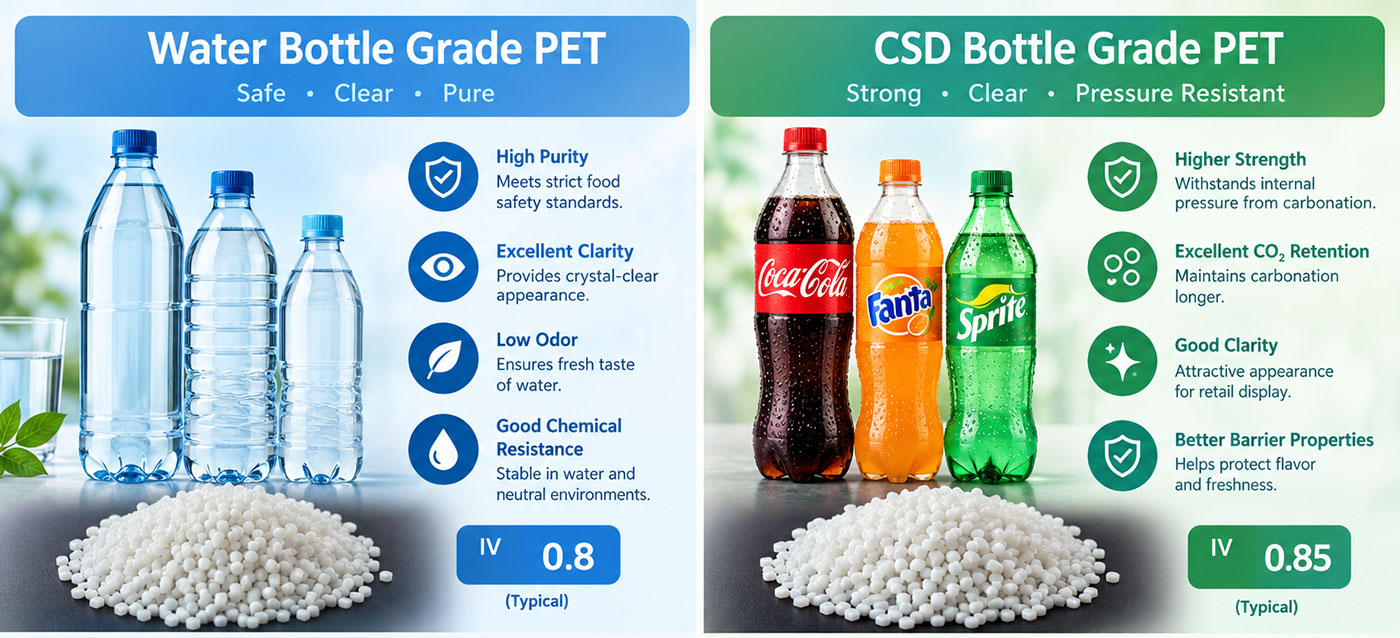
Why bottle grade PET is different from ordinary PET
Bottle grade PET contains tighter quality control for intrinsic viscosity, AA value, color, and food-contact purity because these directly affect beverage taste and bottle performance.
Why Water Type Determines PET Resin Selection
The beverage itself, not the bottle shape, is the primary factor determining which PET resin should be selected.
The biggest difference between still water and carbonated drinks is internal pressure.
>> Still water
Examples include: Mineral water, Purified water, Spring water, Distilled water, Drinking water.
These products generate almost zero internal pressure after filling. Therefore, manufacturers prioritize: Lightweight bottles, Lower resin consumption, High production speed, Excellent transparency.
>> Carbonated beverages
Examples include: Cola, Soda, Sparkling water, Carbonated juice, Energy drinks.
These beverages continuously release dissolved CO₂, creating internal pressure typically between 4 and 6 bar. The bottle must resist expansion and maintain dimensional stability throughout its shelf life.
What Is Water Bottle Grade PET?
Water Bottle Grade PET is the most widely consumed bottle-grade PET resin in the global packaging industry. It is specially developed for non-carbonated beverage bottles where lightweight design and production efficiency are the primary objectives.
Common bottles manufactured with water bottle PET IV 0.8 include:
350 ml mineral water bottles
500 ml drinking water bottles
1 L purified water bottles
1.5 L spring water bottles
5 L household water containers
Most of these bottles are produced using IV 0.80 dL/g PET resin because it provides an excellent balance between strength and lightweight performance.
What Is CSD Bottle Grade PET?
CSD stands for Carbonated Soft Drink. Unlike water bottle PET, this resin is engineered to withstand continuous pressure generated by dissolved carbon dioxide. The molecular chains are intentionally designed with higher molecular weight, resulting in greater tensile strength and improved creep resistance.
CSD bottle PET is commonly used for: Cola beverages, Lemon soda, Sparkling mineral water, Carbonated tea drinks, Energy drinks, Flavored sparkling beverages.
These bottles often have thicker walls and a petaloid bottle bottom to distribute internal pressure more evenly. The higher IV results in stronger molecular bonding, allowing the bottle to retain its shape even after months of storage.
Water Bottle Grade PET vs CSD Bottle Grade PET
>> Intrinsic viscosity
IV is the most important technical indicator. Higher IV means higher molecular weight and stronger mechanical properties.
>> Pressure resistance
Water bottles rarely experience internal stress, while carbonated bottles continuously resist CO₂ pressure during transportation and storage.
>> Bottle design
Water bottles usually adopt a lightweight flat-base design, whereas CSD bottles commonly use a petaloid bottom that improves pressure distribution and prevents deformation.
| Feature | Water Bottle PET | CSD Bottle PET |
| Beverage Type | Still water | Carbonated drinks |
| Internal Pressure | Nearly zero | 4–6 bar |
| Typical IV | 0.80 | 0.84–0.87 |
| Bottle Weight | Lighter | Heavier |
| CO₂ Resistance | Standard | Excellent |
| Burst Strength | Medium | High |
| Top-load Strength | Good | Excellent |
| Material Cost | Lower | Higher |
Technical Parameters That Define Bottle Grade PET
When international buyers compare Water Bottle Grade PET and CSD Bottle Grade PET, IV value is the most important indicator, then the price determines which brand the customer chooses. . Professional purchasing decisions are usually based on the Technical Data Sheet (TDS), because it contains the physical and chemical properties that directly determine bottle performance, production efficiency, and beverage safety.
Among dozens of laboratory indicators, six parameters are considered the most important: Intrinsic Viscosity (IV), Acetaldehyde (AA), Carboxyl End Group (COOH), Diethylene Glycol (DEG), Density, Color (L* and b*).
What Is Intrinsic Viscosity (IV)?
Intrinsic Viscosity (IV) is the single most important quality indicator of bottle-grade PET resin. It represents the average molecular weight of the polymer and has a direct influence on mechanical strength, stretchability, creep resistance, and pressure performance.
Typical IV specifications
| PET Grade | Typical IV (dL/g) | Application |
| Fiber Grade | 0.64–0.72 | Polyester yarn |
| Water Bottle Grade | 0.80 ±0.02 | Still water |
| Hot Fill PET | 0.82 | Juice & tea |
| CSD Bottle Grade | 0.84–0.87 | Carbonated beverages |
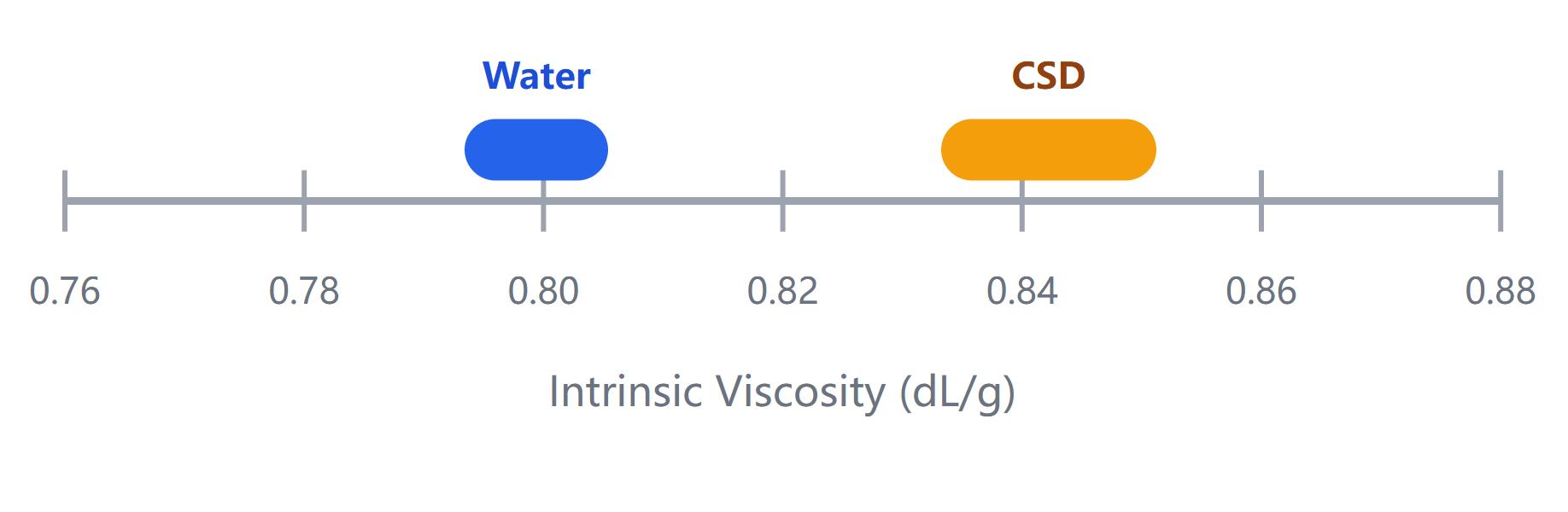
The higher the IV, the longer the molecular chains become. Longer polymer chains improve: Tensile strength, Burst resistance, Pressure resistance, Top-load performance, Long-term dimensional stability. However, higher IV also increases resin viscosity during processing, requiring tighter injection molding control.
Why CSD Bottles Require Higher IV?
Inside a sealed cola bottle, dissolved CO₂ continuously creates internal pressure. During transportation, temperature increases can further increase pressure, placing stress on both the bottle wall and bottle bottom.
Higher IV PET provides: Better molecular orientation, Higher hoop strength, Improved creep resistance, Stronger burst performance, Better bottle shape retention.
For this reason, IV 0.85 has become the standard specification for most cola and sparkling water bottles.

Why water bottle PET requires low AA?
AA is a volatile compound generated during PET polymerization and high-temperature processing. Although present in extremely small quantities, excessive AA can migrate into bottled water and produce an unpleasant taste.
Water has almost no flavor of its own, making consumers highly sensitive to trace acetaldehyde.
The AA level is controlled by: Polymerization technology, Resin purity, Drying quality, Injection temperature, Residence time in the barrel.
For premium mineral water brands, low-AA PET resin is often specified as a mandatory purchasing requirement.
Color Values (L* and b*)
International buyers frequently compare resin appearance using CIELAB color values.
A higher L* indicates greater brightness, while a lower b* reflects reduced yellow tint.
Premium bottle-grade PET emphasizes excellent transparency because beverage appearance strongly influences consumer purchasing decisions.
| Parameter | Typical Bottle PET |
| L* | ≥83 |
| b* | ≤−1 |
| Appearance | Clear, colorless |
Complete TDS Comparison: Water PET vs CSD PET
| Technical Parameter | Water Bottle PET | CSD Bottle PET |
| Intrinsic Viscosity | 0.80 | 0.84–0.87 |
| Acetaldehyde | ≤1 ppm | ≤1 ppm |
| COOH | 20–28 | 25–30 |
| DEG | 1.0–1.5% | 1.0–1.5% |
| Density | 1.40 g/cm³ | 1.40 g/cm³ |
| L* Value | ≥83 | ≥83 |
| b* Value | ≤−1 | ≤−1 |
| Top-load Strength | Good | Excellent |
| Burst Resistance | Medium | High |
| Recommended Bottle | Water | Carbonated |
How Bottle Grade PET Chips Becomes Bottles?
PET resin is not the only factor that affects the quality of the PET bottles. In reality, bottle performance is determined by the combination of resin quality and processing technology. A premium IV 0.85 PET resin can still produce weak bottles if drying is inadequate.
The complete manufacturing route consists of six major stages:

Which Bottle Grade PET Brand Should You Choose?
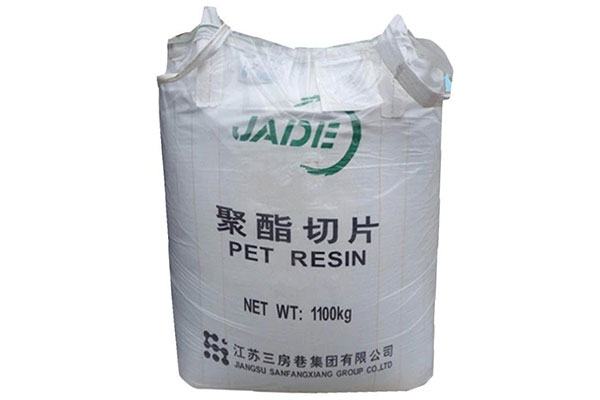
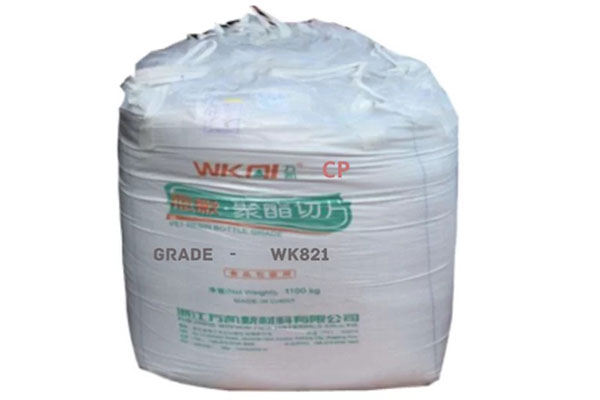
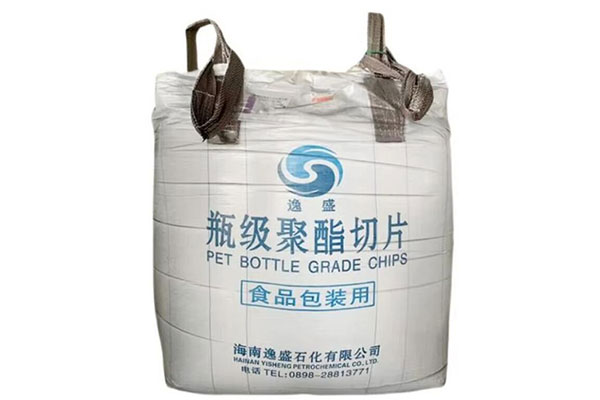
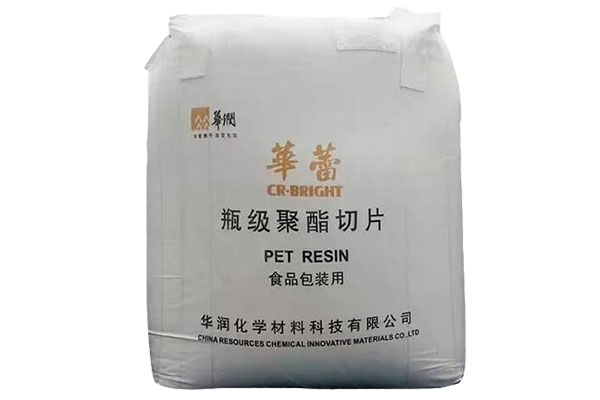
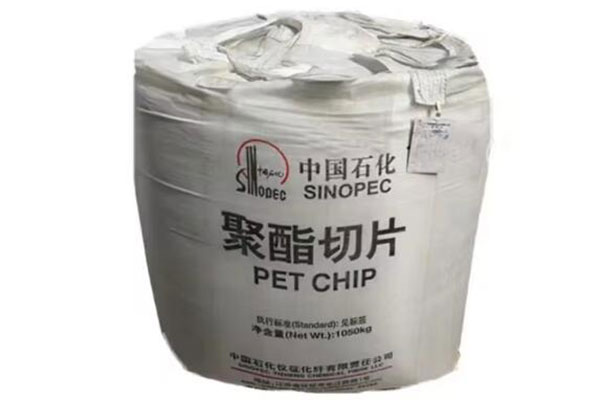
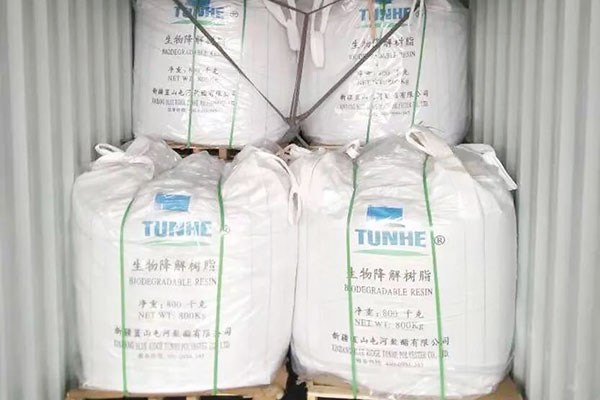
There are several well-known polyester chip manufacturers(JADE, Wankai, Yisheng, China Resources, Yizheng) in China. All of them have stable production capacity, high-quality products, and complete export documentation. As a reliable polyester chip distributor with rich export experience from China, Chemate can offer you the best quotations for all these brands.
Water Bottle Grade PET
| Models | Brands | IV Value (dl/g) |
| CZ-302 | JADE | 0.80±0.02 |
| CZ-302L | JADE | 0.76±0.02 |
| WK-801 | Wankai | 0.80±0.015 |
| YS-W01 | Yisheng | 0.80±0.015 |
| BG80 | Yizheng | 0.80±0.02 |
| CR-8816 | China Resources | 0.806±0.02 |
| CR-8816L | China Resources | 0.76±0.02 |
| TH102 | Tunhe | 0.800±0.015 |
CSD Bottle Grade PET
| Models | Brands | IV Value (dl/g) |
| CZ-328 | JADE | 0.850 ± 0.02 |
| CZ-328A | JADE | 0.850 ± 0.02 |
| WK-851 | Wankai | 0.88± 0.015 |
| WK-881 | Wankai | 0.87± 0.015 |
| YS-C01 | Yisheng | 0.875±0.015 |
| CR-8828 | China Resources | 0.850 ± 0.02 |
| BG85 | Yizheng | 0.875±0.015 |
| BG85H | Yizheng | 0.875±0.015 |
| TH104 | Tunhe | 0.870±0.015 |
FAQs about Water Bottle Grade PET vs CSD Bottle Grade PET
1. What is the difference between Water bottle PET and CSD bottle PET?
Water bottle PET is designed for non-carbonated beverages using IV 0.80, while CSD PET is developed for carbonated beverages requiring higher pressure resistance and IV 0.84–0.87.
2. Why IV 0.80 is ideal for water bottles
Water bottles prioritize lightweight design. Using excessively high IV would increase material cost without providing significant performance benefits. This is why most 500 ml and 1.5 L mineral water bottles globally use IV 0.80 PET resin.
3. What IV is used for cola bottles?
Most cola bottles use IV 0.85 bottle-grade PET to achieve sufficient burst resistance under CO₂ pressure.
4. Can I use IV 0.80 PET for sparkling water?
It is generally not recommended because sparkling water requires higher creep resistance and pressure stability. For sparkling water bottles, you should choose the CSD bottle PET with IV 0.85.
5. Why is acetaldehyde important?
Acetaldehyde can affect the taste of bottled water. Premium water PET therefore emphasizes low AA content during resin production.
6. What is the ideal moisture level before molding?
Most manufacturers target 20–50 ppm after drying to prevent hydrolysis and IV reduction.
7. Why do carbonated bottles have petaloid bottoms?
Petaloid bottle bottoms distribute internal pressure more evenly and significantly improve burst resistance.
8. Which PET is suitable for 5L water bottles?
IV 0.80 water bottle grade PET is commonly used together with a heavier preform.
9. Is bottle grade PET recyclable?
Yes. PET is one of the world’s most recyclable packaging plastics and is widely recycled into bottles, sheets, fibers, and engineering products.